

Wellness Gadgets 2026: 27 Devices, Apps & Habits That Actually Improve Your Health (Science-Backed Guide)
A calm, evidence-driven field guide to the wellness gadgets, health tech devices, and daily habits that genuinely move the needle—plus how to avoid the hype and build a sustainable routine.
The notification arrives at 2:47 AM. Your smartwatch buzzes. Heart rate elevated. Sleep disrupted. Again.
You bought it to improve your health. Instead, it’s quantifying your anxiety.

A lightweight, affordable fitness band with strong sleep and activity tracking for beginners and daily users.
Check availability →This contradiction defines wellness technology in 2026. We live in an era where a ring can measure your body temperature fluctuations to within 0.1 degrees, where apps promise to rewire your neural pathways in eight minutes, where standing desks cost more than plane tickets. The global wellness economy reached $6.3 trillion in 2025, with health technology representing its fastest-growing segment. Yet rates of burnout, sleep disorders, and mental health challenges have never been higher.
The question isn’t whether wellness gadgets work. It’s which ones work, for whom, and under what conditions.
This guide exists because the wellness technology landscape has become deliberately confusing. Marketing departments have learned to weaponize scientific language. A device that tracks steps becomes a “metabolic optimization system.” An app that plays nature sounds becomes “evidence-based neuroacoustic therapy.” Meanwhile, genuinely useful tools get buried under algorithmic noise and influencer partnerships.
Since 2020, three forces have accelerated wellness technology adoption. First, the pandemic normalized health monitoring. Taking your temperature became routine. Remote patient monitoring proved viable. Telehealth appointments outnumbered in-person visits for the first time in medical history. Second, mental health awareness reached critical mass globally. Governments from Singapore to Brazil launched digital mental health initiatives. Employers began offering meditation app subscriptions. The stigma barrier, while not eliminated, lowered significantly. Third, artificial intelligence matured enough to power genuinely personalized health interventions rather than generic advice engines.
What makes 2026 different is integration. Early wellness gadgets existed in isolation. Your fitness tracker didn’t communicate with your sleep app. Your meditation timer had no awareness of your stress patterns. Your smart scale couldn’t contextualize weight fluctuations against sleep quality or menstrual cycles. Modern systems connect these data streams, creating feedback loops that approximate clinical monitoring.
But integration brings new problems. Privacy concerns intensify when multiple devices share biometric data. Decision fatigue worsens when six apps send conflicting recommendations. And the fundamental question persists: does measuring something automatically improve it?
This article systematically evaluates 27 wellness technologies across five categories—wearables, environmental devices, mental health tools, body awareness systems, and integrated habit platforms. Each assessment answers four questions: What does the research actually show? What are the realistic use cases? Who benefits most? What are the limitations and risks?
You’ll find no affiliate urgency here, no “limited-time optimization,” no biohacker evangelism. Instead, you’ll get the framework to decide whether a device deserves space in your life or whether a habit change would work better. Some gadgets deliver measurable benefits. Others solve problems you don’t have. Most fall somewhere in between, useful for specific people in specific situations.
The structure follows a logical progression. We begin with context—why wellness technology exploded and why skepticism remains warranted. Then we examine wearables, the category most people encounter first. Environmental wellness tech comes next, followed by mental health tools, then nutrition and movement devices. Finally, we explore how to combine tools and habits into sustainable daily systems rather than accumulating disconnected gadgets.
By the end, you’ll understand which wellness technologies align with evidence, which address your actual needs, and how to build a personalized approach without becoming dependent on constant monitoring. Because the ultimate goal isn’t optimization. It’s sustainable wellbeing that doesn’t require checking your phone every twenty minutes.

Why Wellness Gadgets Exploded (And Why Skepticism Still Matters)
The wellness technology surge didn’t happen by accident. It emerged at the intersection of genuine need, technological capability, and sophisticated marketing.
Start with the mental health crisis. World Health Organization data shows anxiety and depression increased by 25% globally between 2020 and 2023. In 2024, one in eight people worldwide lived with a mental disorder. Waiting lists for therapy stretched to six months in many countries. Digital interventions filled a genuine access gap. When face-to-face care wasn’t available, apps and devices offered something—imperfect, but immediate.
Burnout followed similar patterns. The Stanford Medicine National Physician Burnout and Depression Report found that healthcare worker burnout, already high, increased during the pandemic and remained elevated through 2025. But burnout wasn’t confined to medical professionals. Remote workers reported difficulty disconnecting. Students faced unprecedented academic pressure. Parents navigated impossible caregiving-work balances. Wellness technology promised solutions: meditation timers, productivity trackers, sleep optimization systems.
Demographics amplified demand. Global populations are aging. By 2025, there were approximately 700 million people aged 65 and over worldwide. This group increasingly embraces preventive health technology. Fall detection watches. Medication reminder systems. Blood pressure monitors with automatic data sharing to physicians. For older adults managing chronic conditions, wellness gadgets offer independence and safety.
Younger demographics drove adoption through different channels. Digital natives grew up quantifying social interactions through likes and followers. Applying similar metrics to health felt natural. Fitness tracking gamified exercise. Sleep scores created competition. Heart rate variability became a conversation starter. The self-quantification movement, once confined to Silicon Valley biohackers, went mainstream.
Trust dynamics shifted. Supplement sales declined in several markets as consumers grew skeptical of unregulated products making health claims. Simultaneously, trust in devices increased. A wearable fitness tracker felt more credible than a bottle of pills promising similar benefits. Technology companies successfully positioned themselves as more trustworthy than wellness supplement manufacturers, despite their own significant commercial interests.
The Technological Capabilities That Made It Possible
Sensors miniaturized and became affordable. A photoplethysmography sensor that cost $30 in 2015 cost $3 by 2025. Accelerometers became standard in $20 devices. Battery life improved dramatically—many wearables now run seven days or longer. Processing power increased while energy consumption decreased. Machine learning models that once required cloud computing now run on wrist-worn chips.
Artificial intelligence evolved from gimmick to utility. Early wellness apps delivered generic advice. Modern systems adapt. A sleep app in 2026 doesn’t just track hours. It correlates sleep patterns with hundreds of variables—exercise timing, caffeine intake, screen exposure, room temperature, stress indicators—then generates personalized recommendations. Not perfectly, but measurably better than generic guidance.
Connectivity infrastructure expanded. Reliable internet reached 5.4 billion people by 2025. Smartphone penetration hit 85% in urban areas globally. These platforms enabled continuous data syncing, remote monitoring, and telehealth integration. A blood pressure reading taken at home could reach a physician within seconds. An abnormal heart rhythm detected by a watch could trigger emergency protocols automatically.
The Reality Check: Why Skepticism Remains Essential
For all this progress, significant problems persist. Privacy concerns top the list. Wellness devices collect intimate data—sleep patterns, heart rhythms, menstrual cycles, mental health responses, location history. Data breaches and unauthorized sharing create genuine risks. Several major wellness companies faced regulatory action between 2023 and 2025 for privacy violations.
Accuracy varies wildly. Consumer-grade sensors don’t match medical equipment precision. A 2024 systematic review found that wrist-worn heart rate monitors showed acceptable accuracy during rest but significant errors during high-intensity exercise. Sleep staging algorithms disagreed with polysomnography results in up to 30% of cases. Calorie burn estimates could be off by 20-40%. Users making health decisions based on flawed data creates real risks.

Designed for people who want deep recovery insights, strain tracking, and personalized coaching—used by professionals worldwide.
Explore WHOOP on Amazon →Psychological dependence emerges. Some users develop orthorexia-adjacent behaviors, obsessively checking metrics and experiencing anxiety when devices malfunction or batteries die. Research published in the Journal of Medical Internet Research in 2025 documented cases where fitness tracker removal triggered withdrawal-like symptoms. The tools meant to reduce anxiety sometimes became anxiety sources.
Equity issues remain. Most wellness technology requires smartphone ownership, reliable internet, and disposable income. This creates a wellness gap where those with greatest health needs have least access to monitoring tools. Global health disparities widen when preventive care increasingly depends on devices that cost more than monthly food budgets in many countries.
Commercial incentives distort information. Companies selling wellness gadgets fund much of the research on wellness gadgets. Independent replication studies often show more modest effects than industry-funded trials. Marketing budgets dwarf research budgets. For every peer-reviewed study, there are a thousand Instagram posts from influencers with undisclosed brand partnerships.
These limitations don’t invalidate wellness technology. They establish necessary context. Some devices deliver meaningful benefits when used appropriately by suitable populations. Others solve problems that don’t exist. Most fall somewhere in between. The key is discernment—understanding what tools can and cannot do, and maintaining perspective about where technology helps and where human wisdom matters more.

Wearables That Actually Help (When Used Wisely)
Wearable wellness technology represents the category most people encounter first. The logic seems straightforward: strap sensors to your body, collect data, gain insights, improve health. Reality proves more nuanced.
Fitness Trackers: The Entry Point
Basic fitness trackers focus on movement—steps, distance, active minutes, calories burned. The evidence supporting step tracking specifically shows modest but real benefits. A 2024 meta-analysis published in JAMA Internal Medicine found that participants using pedometers increased physical activity by an average of 2,500 steps per day compared to control groups. This translated to meaningful health improvements including reduced blood pressure and improved glucose control.
But step tracking works primarily through motivation and awareness, not through the numbers themselves. The magic happens when someone sees their 3,000 daily steps and decides to add a walk. The device functions as accountability tool, not oracle. For people already active, step tracking rarely changes behavior. For sedentary individuals contemplating change, it can provide the nudge that initiates a lasting habit.
Calorie burn estimates from fitness trackers remain problematic. These calculations depend on algorithms that make assumptions about your metabolism, efficiency, and exertion level based on limited inputs. A 2025 validation study comparing twelve popular fitness trackers against gold-standard metabolic measurement found error rates ranging from 15% to 45%. Two people could perform identical workouts and receive vastly different calorie estimates based on individual metabolic differences the device can’t measure.
This doesn’t make fitness trackers useless. It means using them for relative comparisons rather than absolute numbers. Was today more active than yesterday? Did this week exceed last week? These relative measures provide useful feedback without requiring precise accuracy.
Who Actually Benefits From Fitness Trackers
Fitness trackers work best for people in specific situations. Beginners initiating exercise habits see the greatest benefit. The novelty factor maintains engagement through the critical first eight weeks when new habits either solidify or collapse. Visual progress—watching step counts climb, seeing active minutes accumulate—reinforces behavioral change.
Remote workers benefit from movement reminders. Sitting for extended periods creates genuine health risks. Hourly prompts to stand and move, while annoying, interrupt prolonged sitting. Research shows that breaking up sitting time matters more than total sitting duration. Even two-minute movement breaks every hour improve metabolic markers.
People managing specific health conditions find targeted value. Diabetics monitoring how exercise affects glucose levels. Cardiac rehabilitation patients tracking exertion intensity. Individuals with joint conditions learning to identify activity patterns that trigger inflammation. For these users, fitness trackers serve clinical purposes beyond general wellness.
Smartwatches Versus Basic Bands
Smartwatches incorporate fitness tracking within broader functionality—notifications, apps, payments, communications. The wellness question becomes whether the additional features enhance or undermine health goals.
The case for smartwatches centers on integration. One device handles multiple functions. Phone notifications on your wrist mean fewer phone checks, potentially reducing screen time. Payment capability eliminates wallet bulk. Emergency features like fall detection and SOS calling provide legitimate safety benefits, particularly for older adults or people with medical conditions.
The case against smartwatches focuses on distraction and dependence. Wrist notifications often increase rather than decrease phone interactions. The constant connectivity prevents the disconnection many people need for mental health. Battery life typically runs only one to two days, requiring frequent charging. The higher price point—often $300 to $800—makes them less accessible than basic fitness bands that cost $30 to $100.
From a pure wellness tracking perspective, smartwatches and basic bands use similar sensors and algorithms. The accuracy differences within each category often exceed the differences between categories. A well-implemented basic band can track fitness as accurately as an expensive smartwatch. The choice depends on whether you want a dedicated wellness tool or a multifunctional device.
Sleep Tracking: Useful Data or Anxiety Generator
Sleep tracking represents one of the most requested wellness features and one of the most controversial. Consumer wearables use movement and heart rate to estimate sleep stages—light, deep, REM, and awake. The question is whether these estimates provide actionable information.
Polysomnography, the gold standard for sleep measurement, uses brain wave monitoring, eye movement tracking, and muscle activity sensors. Consumer wearables use accelerometers and photoplethysmography. They’re measuring different things and inferring sleep architecture from limited signals. Validation studies consistently show that consumer devices overestimate sleep quality and show only moderate agreement with polysomnography on sleep staging.
Yet sleep tracking still offers value if approached correctly. The specific numbers matter less than the patterns. Are you consistently getting seven to eight hours of opportunity for sleep? Do you notice patterns between daytime behaviors and sleep quality metrics? Does the data help you prioritize sleep in scheduling decisions?
Sleep tracking becomes problematic when people develop orthosomnia—perfectionism about sleep scores that causes anxiety which worsens sleep. Some users lie awake worrying about whether they’ll get enough deep sleep, checking their watch repeatedly, which guarantees they won’t. For these individuals, sleep tracking undermines the behavior it’s meant to improve.
The research-supported sleep hygiene practices matter more than any device. Consistent sleep schedule. Cool, dark, quiet room. Limited screen exposure before bed. No caffeine after 2 PM. Stress management. If you’re not doing these basics, sleep tracking provides data about a problem you already know how to solve.
Heart Rate, HRV, and Blood Oxygen: What the Numbers Mean
Modern wearables measure multiple physiological parameters. Understanding what they actually indicate helps prevent misinterpretation.
Resting heart rate varies by individual fitness level, age, genetics, and numerous other factors. Typical ranges span from 40 beats per minute in highly trained athletes to 100 in some healthy but less fit individuals. The number itself matters less than changes in your personal baseline. A resting heart rate consistently elevated by 10-15 beats above your normal could indicate overtraining, illness, stress, or dehydration. The device doesn’t diagnose, but it prompts awareness.
Heart rate variability measures the variation in time between heartbeats. Higher HRV generally indicates better cardiovascular fitness and stress resilience. Lower HRV can signal overtraining, inadequate recovery, or high stress load. But HRV varies dramatically between individuals. Someone with an HRV of 30 might be perfectly healthy while someone else thrives at 100. Like resting heart rate, personal trends matter more than absolute numbers.
Blood oxygen saturation sensors in consumer wearables measure SpO₂. Normal ranges sit between 95% and 100%. Values consistently below 90% warrant medical consultation. Sleep apnea, lung conditions, and cardiovascular problems can affect oxygen saturation. But sensor accuracy varies, particularly with movement or poor skin contact. A single low reading shouldn’t trigger panic. Consistent patterns warrant professional evaluation.
When Wearables Create More Problems Than They Solve
Several warning signs indicate wearable technology isn’t serving your wellbeing. Compulsively checking metrics throughout the day suggests anxiety rather than insight. Feeling distress when you forget to wear the device or when the battery dies indicates unhealthy dependence. Exercising primarily to achieve device goals rather than because movement feels good represents inverted priorities. Experiencing shame or anxiety about metrics indicates the tool is undermining rather than supporting mental health.
For some people, the solution is adjusting usage patterns. Checking metrics once daily rather than continuously. Turning off notifications. Focusing on one or two key metrics rather than attempting to optimize everything. For others, the solution is removing the device entirely. No shame attaches to recognizing that constant biometric surveillance doesn’t align with your wellbeing needs.
Wearables work best as temporary awareness tools. Use one for three months to understand your baseline patterns. Identify areas for improvement. Implement changes. Then reassess whether continued monitoring provides value or whether you’ve learned what you needed and can now proceed with embodied awareness rather than constant measurement.

Home & Environment Wellness Tech
The space where you live, work, and sleep profoundly affects health. Environmental wellness technology aims to optimize air quality, light exposure, ergonomics, and circadian rhythm alignment. Some interventions deliver measurable benefits. Others address problems that don’t significantly impact most people.
Air Purifiers: When They Matter and When They Don’t
Air purifiers remove particulates, allergens, and some pollutants from indoor air. The question is whether indoor air quality in your specific environment justifies the device cost and ongoing filter expenses.
The research supporting air purifiers focuses on specific populations and conditions. People with asthma show measurable symptom improvement when air purifiers with HEPA filters reduce particulate exposure. A 2024 systematic review found that HEPA filtration reduced asthma exacerbations by approximately 30% in controlled studies. Individuals with allergies to dust mites, pet dander, or pollen experience similar benefits.
Urban residents in areas with significant outdoor air pollution see indoor air quality improvements from purifiers, particularly when windows must remain closed. Cities with air quality indexes regularly exceeding 100 create conditions where indoor filtration provides genuine benefit. Wildfire smoke events, which increased in frequency and intensity through 2025, made air purifiers valuable during acute exposure periods.
But most homes in areas with good outdoor air quality don’t require continuous air purification. The single most effective air quality intervention is opening windows when outdoor air quality permits. This simple action costs nothing and provides complete air exchange within minutes.
Light Therapy Lamps and Circadian Rhythm
Light exposure profoundly influences circadian rhythm, sleep quality, mood, and energy levels. Light therapy lamps deliver bright light—typically 10,000 lux—to simulate outdoor daylight exposure.
The strongest evidence supports light therapy for seasonal affective disorder. Multiple randomized controlled trials show that morning bright light therapy, typically 30 minutes at 10,000 lux, reduces seasonal depression symptoms comparably to antidepressant medication. A 2023 meta-analysis confirmed these effects across diverse populations and geographies.
Benefits extend beyond clinical depression. People experiencing winter fatigue, difficulty waking, or afternoon energy crashes often report improvements from morning light exposure. Shift workers and travelers crossing time zones use light therapy strategically to adjust circadian phase. The mechanism is well-established—bright light suppresses melatonin production and signals daytime to the master circadian clock.
But light therapy isn’t universally beneficial. People with bipolar disorder should consult physicians before using bright light therapy, as it can potentially trigger manic episodes. Individuals with certain eye conditions or taking photosensitizing medications need medical guidance. And the timing matters critically—evening bright light exposure can worsen insomnia by delaying circadian phase.
The natural alternative deserves mention. Morning outdoor light exposure, even on cloudy days, often exceeds 5,000 lux and provides additional benefits—fresh air, gentle exercise if walking, cost-free. A 15-minute morning walk delivers light therapy plus movement plus nature exposure. Light therapy lamps make sense primarily for people unable to access morning outdoor light—early risers departing before sunrise, workers in windowless offices, or those in regions with extended dark winters.
Standing Desks and Ergonomic Furniture
Prolonged sitting correlates with numerous health risks—cardiovascular disease, metabolic dysfunction, musculoskeletal problems, even mortality. Standing desks promise to interrupt sitting and improve health outcomes. The research shows more modest benefits than marketing suggests.
A 2024 systematic review found that standing desks effectively reduce sitting time by one to two hours daily. Users report less back pain and increased energy. But standing desks don’t significantly increase calorie expenditure—standing burns only marginally more calories than sitting. The primary benefit comes from interrupting static posture rather than from standing itself.
The key is variation. Alternating between sitting, standing, and movement throughout the day provides benefits no single position delivers. Optimal patterns appear to be sitting for 20-30 minutes, standing for 8-10 minutes, then moving for 2-3 minutes, repeated cyclically. Fixed standing for hours creates different problems—leg fatigue, varicose veins, lower back strain.
Ergonomic chairs matter more than standing desks for many people. Proper lumbar support, adjustable height, and appropriate seat depth reduce musculoskeletal strain during necessary sitting. A high-quality ergonomic chair plus regular movement breaks often outperforms a standing desk with poor chair option.
Blue Light Glasses: Separating Science from Marketing
Blue light glasses promise to reduce eye strain, improve sleep, and prevent retinal damage from screen exposure. They’ve become a major wellness accessory market. The scientific support remains surprisingly limited.
The eye strain argument lacks solid evidence. A 2024 systematic review by the American Academy of Ophthalmology found no consistent evidence that blue light causes digital eye strain. The discomfort people experience during prolonged screen use likely results from reduced blink rate and fixed near focus, not blue wavelength exposure specifically. The twenty-20-20 rule—every 20 minutes, look at something 20 feet away for 20 seconds—addresses the actual causes more effectively than blue light filtering.
The sleep argument has more theoretical support but mixed real-world evidence. Blue wavelength light suppresses melatonin production more than other visible light wavelengths. Evening blue light exposure can delay circadian phase. But controlled studies using blue light glasses show inconsistent sleep improvements. Many studies show no significant effect. The probable explanation is that screen content and engagement matters more than wavelength—exciting, stimulating content disrupts sleep regardless of light color.
Blue light glasses aren’t harmful, just largely ineffective for their marketed purposes. If you find them helpful—perhaps through placebo effect or as a reminder to moderate screen time—they’re harmless. But free alternatives likely work better: reducing screen brightness in evenings, using device night mode settings, avoiding screens for 30-60 minutes before bed, or addressing digital eye strain through proper breaks and blink awareness.
The Integration Strategy: Making Environmental Changes That Matter
The most impactful environmental wellness interventions often cost nothing. Opening windows for fresh air when outdoor conditions permit. Optimizing bedroom darkness for sleep—blackout curtains, covering indicator lights. Maintaining cool sleeping temperatures, around 65-68°F (18-20°C). Reducing bedroom noise or using white noise. Creating clear space boundaries for work versus relaxation.
For purchases that make sense, prioritize based on your specific situation. Documented respiratory issues or poor air quality—air purifier becomes worthwhile. Genuinely limited access to morning light—light therapy lamp provides value. Extended sedentary work—ergonomic chair plus movement reminders beats standing desk alone.
Mental Health & Mind Tech
Mental health applications and devices represent the fastest-growing wellness technology category and the most ethically complex. Apps promise to deliver cognitive behavioral therapy, meditation training, emotional regulation skills, and mental health tracking. Some provide genuine support. Others make irresponsible claims that delay appropriate care.
Meditation Apps: What Actually Transfers to Daily Life
Meditation apps teach mindfulness, breathing techniques, body scans, and various contemplative practices. The user experience typically involves guided audio sessions ranging from three to thirty minutes. The convenience factor—practicing anywhere with headphones—drove adoption among people who would never attend in-person meditation classes.
The evidence base for meditation itself is substantial. A 2024 meta-analysis including over 12,000 participants found that mindfulness meditation reduces anxiety and depression symptoms with effect sizes comparable to first-line treatments. Another systematic review documented that meditation improves attention, working memory, and emotional regulation. These effects appear across diverse populations and persist with sustained practice.
But evidence for meditation apps specifically shows more modest outcomes. Apps can teach techniques effectively, but completion rates pose challenges. Seventy to eighty percent of users abandon meditation apps within the first two weeks. Among continued users, benefits appear primarily in people who build consistent daily practices. The app facilitates practice but doesn’t generate benefits through passive ownership.
Who benefits most from meditation apps: people curious about meditation but intimidated by classes, individuals managing subclinical anxiety or stress, remote workers seeking midday reset tools, students needing study break practices, people with scheduling constraints preventing class attendance. The low cost—many apps offer free basic tiers—makes experimentation low-risk.
Who might need more than apps: individuals with clinical anxiety or depression requiring therapy, people who’ve experienced trauma where unguided meditation might trigger distress, those who find digital guidance distracting rather than helpful, or anyone whose mental health significantly impairs functioning.
CBT-Based Apps: Digital Therapy or Helpful Self-Help?
Cognitive behavioral therapy apps digitize evidence-based psychotherapy techniques. They guide users through thought recording, cognitive restructuring, behavioral activation, and exposure exercises. Unlike meditation apps focusing on present-moment awareness, CBT apps target specific thought and behavior patterns.
Several large randomized controlled trials demonstrate that structured CBT apps reduce symptoms of anxiety and depression. A 2023 meta-analysis found that guided self-help digital interventions—apps with some human support—produced clinically meaningful improvements in mild to moderate depression. Fully automated apps without human support showed smaller but still significant effects.
The key word is “mild to moderate.” CBT apps work best for people experiencing distress that doesn’t severely impair functioning. Someone with moderate social anxiety who avoids certain situations might benefit substantially from an app teaching graded exposure. Someone with severe depression struggling to maintain basic self-care needs in-person professional treatment.
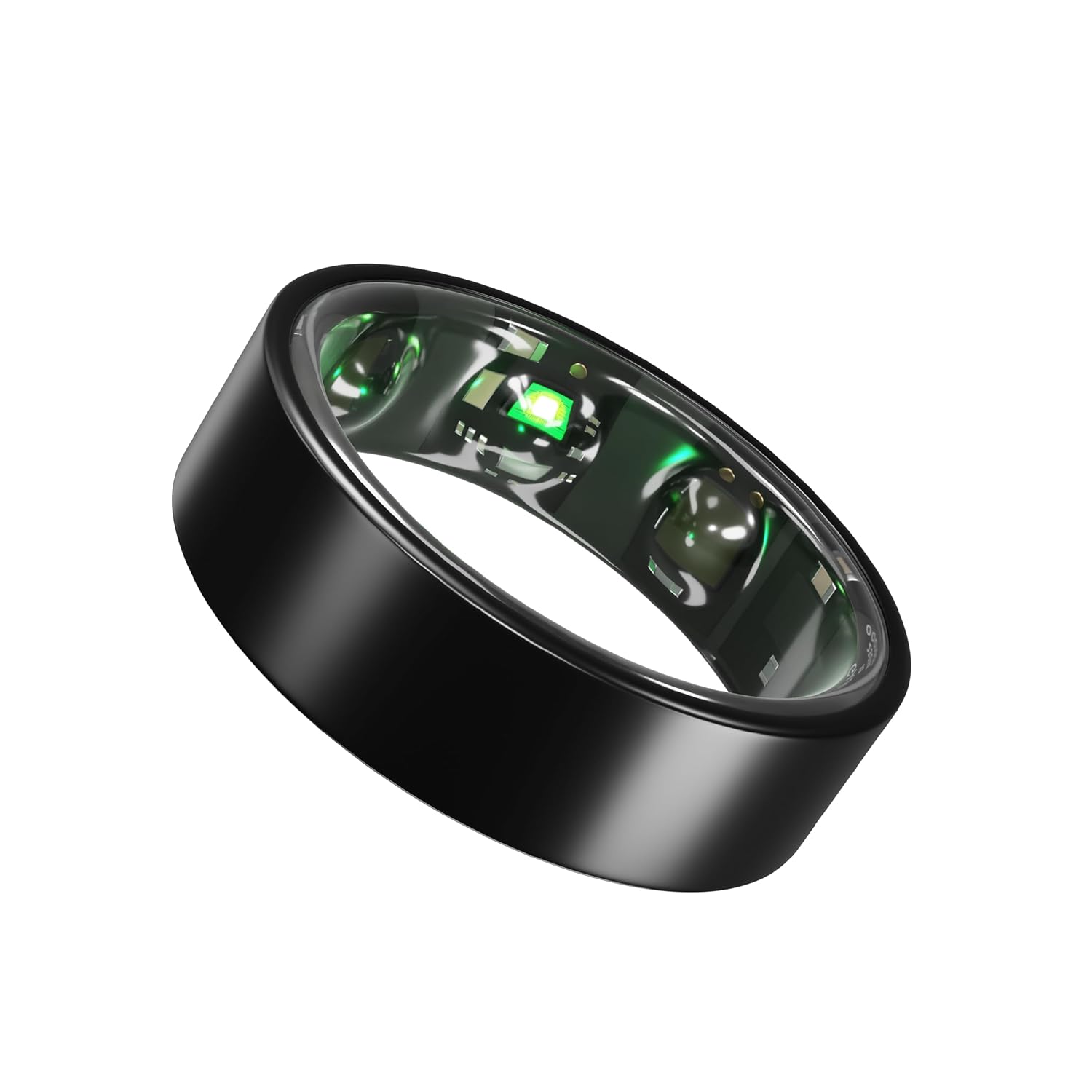
A minimalist smart ring that tracks sleep, recovery, and stress without the distraction of a screen.
See details on Amazon →Breathing and Vagal Tone Devices
Several devices teach breathing techniques or provide biofeedback on breathing patterns. Some use haptic feedback—vibrations signaling when to inhale and exhale. Others display real-time breath visualizations. The most sophisticated track breathing’s physiological effects through heart rate variability.
The underlying science is solid. Slow-paced breathing—typically five to six breaths per minute—activates the parasympathetic nervous system and increases vagal tone. A 2024 systematic review confirmed that slow breathing reduces blood pressure, decreases anxiety, and improves emotional regulation. The effects are immediate and accumulate with regular practice.
But you don’t need devices to breathe slowly. Free apps, timer settings, or simply counting work equally well. Devices add convenience and remove the cognitive load of tracking timing. They make breathing exercises more accessible for people who struggle with self-guided practice. But they’re not necessary.
Digital Journaling and Emotion Tracking Apps
Journaling apps provide structured or freeform writing interfaces, often with prompts, mood tracking, and pattern analysis features. The psychological research supporting expressive writing is robust. Writing about emotional experiences improves mental and physical health outcomes across numerous studies spanning decades.
Digital journaling offers several advantages over traditional paper journals. Searchability helps identify patterns across time. Prompts provide structure for people who struggle with blank pages. Privacy features like passcode protection address concerns about others reading entries. Cloud backup prevents loss. Some apps use natural language processing to identify emotional patterns and provide feedback.
But digital journaling creates new concerns. Privacy risks increase when intimate thoughts exist in cloud storage potentially accessible through breaches or legal requests. The permanence of digital records means emotional processing written during distress remains searchable indefinitely. Some users find typing less emotionally connective than handwriting.
The core practice matters more than the medium. Whether using an app, computer document, or paper notebook, the therapeutic elements are consistency, honesty, and reflection. Research shows that writing about emotional experiences for 15-20 minutes three to four times weekly produces benefits. The specific platform is individual preference.
Ethical Boundaries and When Apps Aren’t Enough
Mental health technology operates in an ethically complex space. Apps can provide valuable support. They can also create false reassurance that delays appropriate care or provides inadequate help for serious conditions.
Clear situations require professional care, not just apps. Suicidal thoughts or plans. Significant impairment in work, relationships, or self-care. Symptoms that worsen despite self-help efforts. Substance abuse. Trauma that causes intrusive memories or avoidance. Severe or persistent symptoms of depression, anxiety, or other mental health conditions. In these situations, apps might supplement professional treatment but should never substitute for it.
Data privacy remains a significant concern. Mental health apps collect sensitive information about emotional states, behaviors, thoughts, and vulnerabilities. Data handling practices vary dramatically. Some apps sell data to third parties. Others lack adequate security. Reading privacy policies matters, though they’re often deliberately opaque.
Nutrition, Movement & Body Awareness Tech
This category includes devices that measure body composition, encourage proper form, remind you to drink water, and track nutrition. The challenge is separating tools that genuinely support healthy behaviors from those that trigger unhealthy preoccupation.
Smart Scales: Understanding the Metrics Beyond Weight
Modern smart scales measure weight, body fat percentage, muscle mass, bone density, water percentage, and sometimes metabolic rate. The question is whether these additional metrics provide useful information or unnecessary complexity.
Body fat percentage estimates from consumer scales use bioelectrical impedance. They send small electrical currents through your body and estimate composition based on resistance. The technology is only moderately accurate. A 2024 validation study found that consumer scales could be off by five to seven percentage points compared to gold standard DEXA scans. Hydration status, recent food intake, and time of day significantly affect readings.
This doesn’t make smart scales useless. Like fitness trackers, they’re useful for tracking relative changes rather than absolute accuracy. If your body fat percentage reading decreases from 30% to 26% over three months while you’re exercising and eating well, that likely reflects real change even if the absolute numbers aren’t precise. The direction and magnitude matter more than the specific values.
Who benefits from smart scale metrics: people working toward body composition changes who need feedback beyond weight alone, individuals building muscle who might not see weight changes reflect their progress, people managing weight as part of health conditions where detailed tracking helps.
Who should avoid smart scales: people with histories of eating disorders, anyone who becomes anxious or obsessive about body metrics, individuals whose self-worth becomes tied to daily readings, or people for whom any form of numerical body assessment triggers unhealthy patterns.
Posture Trainers and Form-Tracking Apps
Posture trainers attach to your back or shoulders and vibrate when you slouch. Form-tracking apps use smartphone cameras to analyze exercise technique during workouts. Both aim to improve body mechanics and reduce injury risk.
The evidence for posture correction devices shows limited long-term effectiveness. They can increase awareness during wear, but most people revert to habitual postures once removed. Sustainable posture improvement requires strengthening postural muscles, improving mobility, and developing body awareness. Devices might initiate awareness but rarely create lasting change alone.
Form-tracking apps for exercise show more promise. Real-time or post-workout video analysis helps beginners learn proper technique. Some apps use artificial intelligence to identify form breakdowns during squats, pushups, or other movements. This provides feedback that otherwise requires personal trainers or knowledgeable training partners.
Smart Water Bottles: Motivation or Complexity?
Smart water bottles track how much water you drink and often send reminders to hydrate. The question is whether tracking hydration provides value worth the $30-100 premium over regular bottles.
The hydration needs vary significantly by individual, activity level, climate, and health status. Generic recommendations like “drink eight glasses daily” lack scientific basis. The more accurate guidance is to drink when thirsty, ensure urine is light yellow, and increase intake during exercise or heat exposure.
For most people, thirst is an adequate hydration guide. The body’s thirst mechanism evolved to maintain hydration effectively. Overriding this system with arbitrary numerical targets can lead to overhydration, which carries its own risks.
Nutrition Tracking Apps: When Logging Helps and When It Harms
Nutrition tracking apps allow detailed logging of food intake, calories, macronutrients, and micronutrients. They can support weight management, athletic training, and health condition management. They can also trigger or exacerbate disordered eating.
The research on nutrition tracking for weight loss shows short-term effectiveness. People who track food intake lose more weight initially than those who don’t. But long-term adherence rates are low. Most people abandon detailed tracking within a few months.
Nutrition tracking works well for specific purposes and time-limited goals. Athletes manipulating macronutrient ratios for performance. People with diabetes learning how foods affect glucose levels. Individuals identifying food sensitivities or allergies. Someone working with a dietitian to understand current eating patterns before making changes.
But perpetual tracking creates problems. The mental burden of logging every food item is substantial. The precision required for accurate tracking—weighing foods, measuring portions—doesn’t fit naturally into social eating or home cooking. Many people find that tracking increases rather than decreases food preoccupation.
The alternative is mindful eating without numerical tracking. Paying attention to hunger and fullness cues. Noticing how different foods affect energy and satisfaction. Eating slowly and without distraction. Building general awareness of portion sizes without measuring.
Red Flags and Healthy Relationships With Body-Focused Technology
Several warning signs indicate body-focused wellness technology has become counterproductive. Tracking every metric obsessively. Experiencing anxiety when unable to log or measure. Allowing numbers to dictate food choices over hunger and preference. Feeling shame or failure about measurements. Comparing your metrics to others’. Continuing to track despite negative emotional effects.
For people with eating disorder histories or body image struggles, body-focused technology often does more harm than good. The quantification can feed control-seeking behaviors and reduce intuitive body connection. Health professionals generally recommend that these individuals avoid fitness trackers, smart scales, and nutrition apps until they’ve established solid recovery.
The healthiest relationship with body awareness technology treats it as temporary feedback for specific purposes, not permanent surveillance. Use tools to understand your baseline. Identify areas for improvement. Track changes during active behavior modification. Then decrease or eliminate tracking once new habits solidify and embodied awareness develops.
Building a Daily “Wellness Stack” (Without Gadget Overload)
Combining multiple wellness technologies risks creating complexity that undermines the simplicity wellness requires. Most people thrive with minimal tools strategically chosen and integrated into sustainable routines. The following frameworks show how different lifestyles can incorporate wellness technology without accumulating drawer clutter.
The Student Stack: Focus, Sleep, Movement
Students face unique wellness challenges—irregular schedules, academic stress, social pressures, often limited budgets, and digital overload. The student wellness stack prioritizes foundational behaviors with minimal tools.
Core tools: Basic fitness tracker with sleep monitoring. Meditation app with free tier. Productivity timer app. Total cost under $50 with mostly free software.
The implementation focuses on three behaviors. First, sleep protection. The fitness tracker monitors whether you’re getting seven to eight hours consistently. When academic pressure increases, sleep often disappears first. Visible sleep data creates accountability to protect rest. The meditation app provides five-minute study break practices—not for spiritual development but for cognitive reset between intense focus blocks.
Second, movement integration. Students sitting for extended study sessions need movement breaks. The fitness tracker’s hourly movement reminder interrupts prolonged sitting. Brief walks between classes, using stairs, standing while reading—these micro-movements accumulate without requiring gym time or structured exercise.
Third, focus without burnout. The Pomodoro Technique—25 minutes focused work, five-minute breaks—prevents the cognitive fatigue that leads to inefficient marathon study sessions. Free timer apps structure work blocks. The five-minute breaks incorporate brief movement or breathing exercises from the meditation app.
The Remote Worker Stack: Movement, Breaks, Environment
Remote workers face different challenges—sedentary work, boundary dissolution between work and personal time, potential isolation, and ergonomic strain. This stack addresses those specific needs.
Core tools: Standing desk converter or reminder system. Light therapy lamp (if limited morning light access). Meditation or breathing app. Ergonomic chair or lumbar support. Investment around $200-400 depending on existing setup.
The implementation creates structure. Morning routine includes 15 minutes near the light therapy lamp if natural light isn’t accessible. This supports consistent wake time and mood regulation. The standing desk converter enables sitting-standing alternation throughout the workday. Ideal pattern: stand for first 30 minutes, sit for 45 minutes, stand for 15 minutes, sit for 30 minutes, repeat with adjustments based on comfort and task demands.
Scheduled breaks prevent the endless work extension remote workers often experience. Hourly movement breaks—two minutes of stretching or walking. Mid-afternoon five-minute breathing session using the app provides stress reset. Hard stop time enforced through device usage schedulers marks work-life boundary.
The Busy Professional Stack: Efficiency, Recovery, Sustainability
Professionals balancing demanding careers with personal lives need wellness approaches that integrate rather than compete with other responsibilities. This stack maximizes benefit per time invested.
Core tools: Mid-range fitness tracker or smartwatch. One meditation app. Quality sleep setup—blackout curtains, temperature control. Strategic rather than comprehensive approach.
The implementation acknowledges time scarcity. Morning movement receives priority—even fifteen minutes matters more than skipped days waiting for hour-long workout windows. The fitness tracker motivates consistency and tracks whether movement is happening at all. Brief sessions accumulate to meaningful weekly totals.
Lunch break optimization creates midday reset. Walking during lunch—outdoors when possible—provides light exposure, movement, and mental break. Twenty minutes of walking beats twenty minutes of social media scrolling for afternoon energy and focus.
Evening wind-down routine protects sleep. Thirty minutes before bed, screens decrease, lights dim, temperature drops. The meditation app provides ten-minute evening practices—not transcendence but nervous system downregulation. The sleep environment setup—darkness, coolness, quiet—amplifies natural sleep drive.
Universal Principles Across All Stacks
Several patterns emerge across effective wellness technology integration. First, fewer tools used consistently beats many tools used sporadically. Pick one or two devices that address your specific needs. Use them regularly. Ignore the rest.
Second, free or low-cost solutions often work as well as expensive alternatives. Walking costs nothing and provides more health benefits than most devices. Bodyweight exercises require no equipment. Natural light is free. Many meditation apps have permanent free tiers. Expensive doesn’t mean effective.
Third, behavior change matters more than measurement precision. An inaccurate fitness tracker that motivates daily walks provides more value than perfectly accurate equipment that sits unused. The tool that gets used beats the optimal tool that doesn’t.
Fourth, technology should support existing habits, not replace them. Apps can remind you to take breaks, but they can’t force you to actually step away from your desk. Trackers can show sleep patterns, but they can’t make you prioritize rest. The discipline and intention come from you. Technology might facilitate but never substitutes for personal commitment.
The relationship between technology and practice should be supportive, not dependent. Use apps to learn meditation basics, then practice independently. Use trackers to establish movement habits, then maintain them through embodied awareness. Use sleep monitors to identify patterns, then implement sleep hygiene practices that don’t require measurement.
The wisdom is ancient. Consistent sleep. Regular movement. Stress management. Social connection. Purpose and meaning. Fresh air and sunlight. Whole foods. These foundational elements determine health outcomes more than any device. Technology can support these foundations but never replaces them.
Conclusion: Technology as Tool, Not Transformation
The fundamental question this guide attempts to answer isn’t which wellness gadgets work best. It’s whether wellness gadgets are necessary at all.
The honest answer is nuanced. Some technologies provide genuine value for specific people in specific situations. Sleep-deprived individuals gaining awareness that prompts better habits. Sedentary workers whose fitness trackers motivate movement. People with respiratory conditions benefiting from air purifiers. Students using meditation apps to manage academic stress. These are real benefits worth acknowledging.
But wellness technology often promises transformation while delivering information. A device that measures your sleep doesn’t improve your sleep. An app that tracks your mood doesn’t regulate your emotions. A wearable that counts your steps doesn’t create the motivation to walk. These tools provide feedback. What you do with that feedback determines whether they provide value.
The wellness industry has successfully convinced many people that health requires constant monitoring and optimization. The truth is simpler and more challenging. Health requires consistent behaviors practiced over years. Seven to eight hours of sleep most nights. Daily movement that elevates your heart rate. Managing stress through practices that actually calm you rather than adding to your task list. Eating mostly whole foods in reasonable portions. Maintaining meaningful relationships. Finding purpose and engagement in your work or pursuits.
These fundamentals haven’t changed. They won’t change. No device makes them easier in any meaningful sense. What devices can do is provide temporary awareness that helps establish or reestablish healthy patterns. They’re scaffolding, not structure. Useful during building phases, removed when foundations solidify.
The people who benefit most from wellness technology typically use it intermittently and strategically. They track sleep for a month to understand their patterns, then implement changes and stop tracking. They use fitness trackers to establish exercise habits, then maintain those habits through intrinsic motivation rather than device dependence. They use meditation apps to learn techniques, then practice independently. They use nutrition tracking briefly to understand current eating patterns, then return to intuitive eating with improved awareness.
The future will bring more sophisticated wellness technology. Sensors will become more accurate. Artificial intelligence will provide increasingly personalized recommendations. Integration between devices will improve. Costs will decrease. Access will expand. But the fundamental tension will remain—the difference between measuring health and creating it, between optimization and wellbeing, between data and wisdom.
This guide has attempted to navigate that tension honestly. Some wellness gadgets work when used appropriately. Many don’t deliver benefits matching their marketing. Most fall somewhere in between, useful for certain people in certain situations. The path to wellness remains what it’s always been—consistent behaviors supporting the foundations of health, practiced with intention and adjusted based on how you feel in your actual lived experience rather than what devices tell you about yourself.
Choose technology that serves your wellbeing rather than technology that promises to create it. Use tools minimally and strategically. Trust your embodied wisdom at least as much as device feedback. Remember that health isn’t optimized through constant measurement but cultivated through patient, consistent practice over years. And recognize that the most important wellness technology might be the discipline to disconnect regularly from all technology and simply live.

Combines heat therapy with deep-kneading shiatsu massage to reduce stiffness, improve circulation, and ease daily tension.
View on Amazon →
A compact percussion massager designed for quick muscle recovery at home, work, or after workouts—powerful without being bulky.
Check price on Amazon →Trusted Research & Global Health Resources
The insights in this guide are grounded in peer-reviewed research and data from globally respected health, psychology, and technology institutions. For readers who want deeper evidence, the following resources provide high-quality, independent validation.
-
World Health Organization (WHO) — Mental health, digital health policy, and global wellness trends
https://www.who.int/health-topics/mental-health -
National Institutes of Health (NIH) — Wearables, sleep science, preventive health research
https://www.nih.gov/health-information -
PubMed (U.S. National Library of Medicine) — Peer-reviewed studies on fitness trackers, sleep tracking, and digital therapeutics
https://pubmed.ncbi.nlm.nih.gov/ -
Centers for Disease Control and Prevention (CDC) — Physical activity, sedentary behavior, and lifestyle health data
https://www.cdc.gov/physicalactivity/index.html -
Harvard T.H. Chan School of Public Health — Evidence-based nutrition, movement, and behavior science
Home
-
American Psychological Association (APA) — Research on mindfulness, CBT apps, stress, and digital mental health tools
https://www.apa.org/topics/mental-health -
Sleep Foundation — Independent sleep research, trackers, circadian rhythm education
Home
-
Stanford Center for Digital Health — Evidence-based evaluation of health technology and wearables
https://med.stanford.edu/digitalhealth.html -
Nature Digital Medicine — High-impact research on digital therapeutics and health tech innovation
https://www.nature.com/npjdigitalmed/

