

Inside Modern Startup Funding: How Angels, VCs, and Corporate Funds Really Decide in 2026
Funding decisions aren’t made on pitch decks. They’re made in corridors, Slack channels, and investment committee meetings where investors evaluate risk, pattern-match your team against past winners, and calculate whether your market is actually winnable.
In 2026, the funding landscape has shifted. Capital efficiency matters more than growth-at-all-costs. Investors care less about your pitch and more about your traction, founder track record, and unit economics. The companies getting funded aren’t the ones with the best stories—they’re the ones with evidence.
This is how investors actually think. This is how capital really decides.
Inside Modern Startup Funding: Navigate This Guide

Image source: Unsplash – Investor evaluating startup funding opportunity (free to use)
How Startup Funding Has Fundamentally Changed in 2026
The era of growth-at-all-costs is over. The 2020-2021 boom created a generation of unprofitable, cash-burning startups that raised massive rounds on flimsy logic. That era ended in 2022-2023 when capital became scarce and LPs demanded returns.
In 2026, investors are patient but ruthless. They want founders who:
- Demonstrate capital efficiency. You don’t need $10M to validate a market. Investors respect founders who do it on $500K.
- Show revenue or traction early. Founders with $50K MRR and a repeatable sales process raise on better terms than founders with pretty decks and zero revenue.
- Have proven execution track records. First-time founders are funded. First-time founders with zero evidence of execution aren’t.
- Understand their market honestly. Investors hate founders who claim a $100B TAM and don’t know who their first customers are.
The Startup Funding Landscape Explained
Capital comes from three main sources: angel investors, venture capital firms, and corporate venture capital. Each has different motivations, decision processes, and risk tolerance.
Angel Investors: The First Capital Check
Angels are high-net-worth individuals or former founders investing personal capital. They’re typically your first check ($25K-$250K range).
Venture Capital Firms: Institutional Risk
VCs deploy capital from institutional LPs (pension funds, university endowments, family offices). They need large returns ($100M+) to justify their model. They’re thesis-driven and portfolio-focused.
Corporate Venture Capital: Strategic Capital
Large companies (Google, Meta, Amazon, Stripe) invest in startups to gain strategic advantage, acquire customers, or manage existential threats. Their return requirement is different—they’re okay with lower financial returns if there’s strategic value.
Angel Investors: How Early-Stage Decisions Are Really Made
Angels invest in founders, not ideas. They’ve built businesses themselves. They know that execution matters infinitely more than the idea.
What Angels Actually Evaluate
| What They Look For | What This Means | Red Flag |
|---|---|---|
| Founder Track Record | Have you built or sold something before? Do you ship? | First-time founder with no evidence of execution |
| Urgency of Problem | Do you feel the pain? Are you solving your own problem? | You’re solving a problem you’ve never experienced |
| Market Sense | Who are your first 5 customers? Do you know your market? | Vague TAM claims, no real customer conversations |
| Team Strength | Do you have a co-founder? Can you attract talent? | Solo founder with no evidence of leadership |
| Capital Efficiency | How far can you go with $50K? Do you bootstrap mindset? | Asking for $500K before proving product-market fit |
How Angels Actually Decide
Angel decisions happen fast. Most angels decide yes or no within the first 15 minutes of meeting a founder. They’re pattern-matching against past winners they’ve invested in.
Common Angel Red Flags
- You haven’t talked to 20+ customers. Angels know that customer discovery is non-negotiable. If you can’t talk about customer feedback, you haven’t done it.
- You have no financial model. Not a 50-page projection. Just: “We charge $X, we expect Y% conversion, target market is Z.” Most founders can’t answer this.
- Your competitive advantage disappears if you explain it. If you can’t articulate why you win in a clear sentence, it’s not a real advantage.
- You’re optimizing for valuation, not money. Founders who negotiate hard on valuation before product-market fit signal they’re thinking like operators on an exit. Angels want operators who focus on building.
Venture Capital Firms: Inside the VC Decision Process
VC decision-making is structured, portfolio-based, and increasingly data-driven. Most people think VCs make decisions in partner meetings. That’s the final step. The real process starts earlier.
The VC Evaluation Pipeline
Step 1: Deal Sourcing
A partner or scout finds your company (warm intro, Product Hunt, Bookface, founder referral). Cold emails get 1-2% response rate from VCs. Warm intros work.
Step 2: Initial Screening (15 min call)
Partner calls you for 15 minutes. Decision: “Is this worth deeper diligence?” Most startups get a “pass” here.
Step 3: Deep Diligence (2-4 weeks)
If you pass screening, a partner digs deeper. They talk to customers, employees, competitors. They analyze unit economics, churn, CAC:LTV ratio. They build a financial model of your market.
Step 4: Partner Meeting
Partner presents the deal to other partners. For early-stage deals, 1-2 partners often champion you. For larger rounds, all partners discuss.
Step 5: Investment Committee
Most VCs have investment committees (3-5 senior partners) who approve deals above a certain size. This is where the final decision happens.
What VCs Evaluate (Ruthlessly)
| Evaluation Category | What VC Funds Care About |
|---|---|
| Market Size | Is the addressable market $1B+? Can this be a $10B+ company? |
| Unit Economics | Is CAC:LTV ratio 1:3+? Gross margin positive? Net dollar retention 110%+? |
| Founder Quality | Have you built something before? Do you have domain expertise? Can you recruit? |
| Traction | Do you have paying customers? How fast is revenue growing? What’s your retention? |
| Distribution | Do you have a repeatable way to acquire customers? Is it capital-efficient? |
| Competitive Positioning | Why do you win? What happens when a big competitor enters? |
| Risk Assessment | What are the existential risks? Technical? Market? Execution? |
Most VC rejections happen at Step 2 (initial screening). Many founders never get past the 15-minute call. Even fewer get invited to partner meetings.
Investment Committee Decision Factors
When your deal reaches the investment committee, the decision criteria narrow:
- Does this fit our thesis? We focus on B2B SaaS, not consumer apps. Are you in our wheelhouse?
- Is the team capable of building a $10B+ company? Most VCs only fund if they think you can hit $1B+ revenue.
- Is the market inflection happening now? Timing matters. If you’re 3 years too early, you can still fail.
- Can we add value? Do we have domain expertise, customer connections, or credibility that helps you succeed?
- What’s the downside risk? If this doesn’t work, how much capital burns before we know?
Corporate Venture Capital (CVC): Strategic Capital Explained
Corporate venture capital is fundamentally different from venture firms. Google, Meta, Amazon, Stripe, and other large companies invest in startups—but their motivations aren’t just financial returns.
Why Corporates Invest in Startups
- Strategic acquisition. Intel invested in Cloudera because they understood data was critical. Later, they acquired it.
- Threat mitigation. Google invests in AI startups to manage the existential threat of being disrupted by AI-native companies.
- Customer success. Stripe invests in fintech startups that use Stripe’s platform. The startup’s growth directly benefits Stripe.
- Talent acquisition. Corporate VCs sometimes invest to build relationships with talented founders, knowing they might recruit them later.
How CVC Decision Logic Differs
| Factor | Traditional VC | Corporate VC |
|---|---|---|
| Return Requirement | 3-5x or higher (IPO/acquisition) | Strategic value (may accept lower returns) |
| Market Size | Must be $1B+ TAM | Can be smaller if strategic |
| Founder Autonomy | High autonomy expected | May expect strategic integration |
| Exit Timeline | 7-10 year horizon | May want acquisition within 3-5 years |
| Use of Capital | Capital deployment only | Capital + platform access + customers |
CVC is often easier to close but can restrict your independence. Google’s GV might invest at a better valuation than a traditional VC. But if Google becomes your largest customer and you want to pivot, that becomes a problem.
Angel vs VC vs Corporate Funding: Detailed Comparison
| Factor | Angel Investors | Venture Capital | Corporate VC |
|---|---|---|---|
| Check Size | $25K-$250K | $500K-$10M+ | $500K-$50M+ |
| Decision Speed | Days to weeks | 3-8 weeks | 2-6 months |
| What They Want | Founder capability, problem fit | Market size, founder quality, traction | Strategic value, market fit, founder alignment |
| Risk Tolerance | Very high (founder dependent) | High (portfolio approach) | Medium (strategic constraints) |
| Value-Add | Mentorship, introductions, credibility | Capital, recruiting, customer intros, PR | Capital + customers + platform + credibility |
| Board Seat | Rarely | Usually (at $500K+) | Usually |
| Exit Pressure | Low (or never exits) | High (expects 10-year horizon) | Medium (strategic timeline) |
| Minimum Traction | Strong founding team, clear problem | $10K-$100K MRR, or very strong team | $100K+ MRR, or strategic fit + strong team |
What Investors Actually Evaluate (Beyond the Pitch Deck)
Most founders think investors care about their pitch. They don’t. Investors care about evidence. Here’s what they’re actually evaluating:
1. Market Size Realism
Investors know when you’re lying about TAM. If you say your market is $50B but you can’t name 10 competitors, red flag. If your first target customer is 0.001% of the TAM, it means you don’t really understand your market.
Smart founders narrow their market initially: “We’re going after remote product managers in high-growth startups. That’s a $500M market today. We can own 10% in 5 years.”
2. Founder Execution History
Have you shipped before? Did you build a product that users loved? Did you exit a company? Even a failed startup shows execution capability.
First-time founders with zero evidence get funded only if they have an exceptional track record in a different domain (Stanford CS PhD in ML, ex-Google senior engineer, etc.).
3. Revenue Signals and Unit Economics
This is the most reliable signal. If you have $50K MRR with 70% gross margin and 120% NDR, you’re fundable. Period. Even if your pitch is mediocre.
- Gross margin: 70%+ (for SaaS)
- CAC payback: <12 months
- LTV:CAC ratio: 3:1 or better
- Net dollar retention: 110%+ (annual SaaS)
- Monthly churn: <5% (annual SaaS)
4. Customer Lock-In and Switching Costs
How sticky is your product? Can customers leave easily? Or is there data/workflow lock-in? Products with high switching costs are defensible.
Investors ask: “If a competitor with 10x your resources enters your market, can you still win?” If the answer is “no,” that’s a problem.
5. Founder Quality Assessment
VCs evaluate founders like athletes. They look for:
- Coachability: Do you take feedback? Or do you defensively protect your ideas?
- Domain expertise: Do you understand your market deeply? Or are you learning it from first principles?
- Founder-market fit: Are you uniquely capable of solving this problem?
- Resilience: How have you responded to past failures?
- Network: Can you recruit talent? Close customers? Access capital?
6. Differentiation That Actually Matters
Most founders claim differentiation that disappears after 30 seconds of explanation. Real differentiation includes:
- Founder access to a unique customer base
- Domain expertise competitors don’t have (ex: founder was a neurosurgeon building surgical software)
- Superior unit economics due to unique operations (ex: Stripe’s API vs traditional payment processors)
- Network effects that strengthen over time (ex: Stripe ecosystem)
Funding Stages Explained: What Investors Expect at Each Level in 2026
Pre-Seed ($25K-$250K)
What’s Expected:
- Strong founding team (ideally some execution track record)
- Clear problem that’s urgent
- Early customer conversations (5-10 conversations)
- MVP or prototype showing product instinct
- No revenue required (but helpful)
- Solo founder with no evidence of hiring ability
- Haven’t talked to any customers
- Can’t articulate why this problem matters
Seed ($250K-$2M)
What’s Expected:
- Product-market fit signals (not proven, but clear direction)
- $10K-$100K MRR or strong engagement metrics
- 20+ customer interviews + clear feedback loops
- Strong team (co-founder + 1-2 early employees)
- Clear path to $1M ARR
- No revenue or engagement signals
- Haven’t proven you can sell
- Churn rate is unclear or high (>10% monthly)
Series A ($2M-$10M+)
What’s Expected:
- Product-market fit proven ($500K-$2M ARR)
- Clear, repeatable customer acquisition model
- Strong unit economics (LTV:CAC 3:1+)
- Team of 5-10 people, strong leadership
- Clear path to $10M+ ARR in 3-4 years
- Revenue <$500K ARR
- Churn rate >10% monthly or declining NDR
- No evidence of repeatable GTM
- Key person dependency (only founder can close deals)
Why Most Founders Get Rejected (The Real Reasons)
Founders think they get rejected because their idea isn’t good. That’s rarely the actual reason. Here are the real rejection reasons:
1. No Distribution Strategy
You built a great product. But you have no repeatable way to acquire customers. You’re relying on free tactics (content, word-of-mouth) that haven’t proven scalable. Investors ask: “How will you reach 10,000 customers? And does the unit economics work?”
How to fix it: Show a customer acquisition model. “We acquire customers through LinkedIn outreach at $500 CAC, LTV is $15K, we can spend $5M on customer acquisition and double our revenue.”
2. Weak Unit Economics
You have revenue, but your CAC is $10K and your LTV is $8K. You’re losing money on every customer. Investors know this is a capital problem, not a revenue problem. They’ll pass.
How to fix it: Either increase LTV (higher pricing, upsells, expansion revenue) or decrease CAC (more efficient marketing, better targeting). Don’t scale broken unit economics.
3. Unclear Founder-Market Fit
You’re passionate about the problem, but investors wonder: “Why are you uniquely capable of solving this?” First-time founders in new markets need to prove they understand the domain deeply.
How to fix it: Build domain expertise before fundraising. “I spent 3 years at McKinsey consulting on supply chain. I understand the pain intimately. Competitors don’t have this insight.”
4. Market Size Too Small
Your $50M target market is too small. Even if you own 100%, you can’t reach the $1B+ outcomes VCs need. Most tier-1 VCs won’t fund anything below $1B TAM.
How to fix it: Expand your definition. “We start in supply chain software ($500M), but we’re building a horizontal platform that can expand to procurement, warehousing, logistics. Total TAM is $20B.”
5. Competitive Pressure
A well-funded competitor exists. Investors think: “If Salesforce enters this market, this founder doesn’t win.” You need a clear reason why you’ll win despite competition.
How to fix it: Narrow your market. “We’re not competing with Salesforce. We’re building for vertical: real estate CRM. We understand the nuances competitors don’t.”
6. Key Person Dependency
You’re the only person who can close enterprise deals. The company can’t scale without you. Investors want to fund founders, not consultants.
How to fix it: Build a repeatable sales process other people can execute. Document your customer conversations. Show you can train a sales team.
How Founders Should Position Before Raising Capital
The position you take before fundraising determines the quality of capital you attract. Position determines valuation, board composition, investor quality, and founder autonomy.
The Three Positioning Strategies
Strategy 1: Revenue-First (Most Defensible)
Get to $50K-$100K MRR before approaching VCs. At this point, you’re not fundraising for validation—you’re fundraising for acceleration.
- You command higher valuations
- You attract better-quality investors (they’re competing for you)
- You retain founder control (you could grow without them)
- Board gets decided by investors instead of being negotiated
Strategy 2: Founder Quality (Strong But Risky)
If you have exceptional founder credentials, raise earlier. Stanford PhD in ML? Ex-Google VP? Previous exit? You can raise at $10K MRR.
- You signal execution capability
- Investors take on more risk with you
- But you’ll be judged harder on metrics
Strategy 3: Market Inflection (Thesis-Aligned)
If you’re riding a clear market wave, you can raise earlier. AI, vertical SaaS, climate tech—these are hot markets where investors are actively hunting. If you’re in a thesis-aligned market, you have more negotiating power.
- VCs will take bigger risks to enter the market
- You’ll likely get better valuations
- But you’ll have more competitor pressure
Real-World Funding Patterns (No Hype, Just Data)
Pattern 1: The Revenue-First Founder
Founder: B2B SaaS founder (not named, but common archetype)
Path: Built MVP on personal savings. Got first customer while still employed. Reached $20K MRR over 8 months. Quit job, grew to $60K MRR in 12 months. Approached VCs.
Outcome: Seed round at $5M valuation (good terms). Series A at $50K MRR. Now valued at $500M. Founder retained 15% equity after Series C.
Key Insight: By waiting until $60K MRR, founder attracted VCs competing for access. This gave founder maximum optionality.
Pattern 2: The Founder-Credential Founder
Founder: Ex-Google engineer with AI expertise
Path: Left Google, got into Y Combinator without revenue. Raised seed on founder credibility. Reached $10K MRR at seed stage. Series A at $50K MRR.
Outcome: Seed valuation was 3x lower than Pattern 1 founder at same stage. But founder raised 6 months earlier.
Key Insight: Founder credentials = faster fundraising. But you pay a price in valuation and dilution.
Pattern 3: The Thesis-Aligned Founder
Founder: Climate tech startup during climate investment boom (2021-2023)
Path: Raised pre-seed on strong thesis alignment, minimal revenue ($5K MRR). Grew to $30K MRR, raised series A in climate thesis environment.
Outcome: Raised significant capital but at inflated valuations. When climate investment thawed in 2023-2024, faced pressure to justify valuations.
Key Insight: Thesis-aligned fundraising is faster but riskier. If the thesis fades, you’re overvalued and pressured to grow unrealistically.
FAQs: Startup Funding Questions Answered
A: No. Stripe bootstrapped to $1M revenue before raising seed. GitHub reached $100M ARR before being acquired (had venture capital but grew revenue-first). However, VC funding does accelerate growth. The question is: Do you want to grow fast (and dilute significantly) or build sustainably and grow slower? Both are valid paths.
A: 1) You have paying customers (minimum $10K MRR). 2) You have strong founder credentials (proven track record). 3) You’re in a thesis-aligned hot market and have traction (even $5K MRR). For most founders, target $50K MRR before raising. This gives you maximum leverage.
A: Sometimes. Corporate funds often want strategic integration (your product on their platform, your customers using their services). Read term sheets carefully. Some corporate funds are truly hands-off. Others meddle. Due diligence the investor, not just the capital.
A: Execution, by a massive margin. Investors hear 100 ideas per month. They care about 1% of them—not because the idea is better, but because the founder is executing. Proven execution (revenue, users, retention) beats vague ideas. Every time.
A: Seed rounds typically raise 15-25% dilution. So if you’re founder-heavy at seed, you might go 20% dilution and have 80% left. By Series A, you’re typically 50-60% diluted (assuming two prior rounds). This is normal. But if you’re diluting 50% at seed, you negotiated poorly.
A: Massively. VCs respond to warm intros (from founders, angels, other VCs) within 24 hours. Cold emails get 1-2% response. If you’re raising, spend 2 weeks getting warm intros. It’s worth 100x more than cold outreach.
Trusted Resources on Startup Funding
VC Blogs & Educational Content
- Andreessen Horowitz (a16z): Industry-leading VC insights on capital, market, and founder strategy
- Y Combinator: Founder startup school, essays, and investor perspectives
- First Round Review: Investor-backed research on hiring, fundraising, and operations
- SVP (Silicon Valley Insider): In-depth VC market analysis and trends
Government Startup Support & Programs
- US SBA (Small Business Administration): SBIR grants, startup loans, resources
- UK Research & Innovation: Government grants for early-stage tech startups
- Canada Small Business Financing: Government-backed startup loans and grants
- Startup India: Government recognition, tax exemptions, funding programs
Accelerators & Angel Networks
- Y Combinator: Premier accelerator, startup education, investor networks
- 500 Global: Early-stage accelerator with global networks
- Techstars: Accelerator with industry-specific programs
- AngelList: Angel investor network and deal platform
Founder Communities & Resources
- Indie Hackers: Community for bootstrapped founders and solopreneurs
- Product Hunt: Launch products, get founder feedback, build community
- Paul Graham Essays: Essays on startups, founders, and venture capital
- Failory: Startup failure analysis and lessons learned
Final Founder Takeaway: Capital Isn’t Strategy
Capital is a tool. It accelerates your growth. It doesn’t validate your idea. It doesn’t guarantee success. Many well-funded startups fail. Some bootstrapped startups become category killers.
The decision to raise capital should be strategic: Do I need capital to win this market? Can I afford to give up equity and control? Or should I bootstrap and grow sustainably?
If you do raise capital:
- Get to $50K+ MRR first (gives maximum leverage)
- Build relationships with investors before pitching (warm intros only)
- Know your metrics cold (unit economics, churn, CAC:LTV)
- Have a clear narrative (who is your customer, why do you win, what’s the market)
- Negotiate terms carefully (valuation, board composition, liquidation preferences)
- Avoid celebrity investors (choose investors who’ll add real value)
In 2026, the funding landscape favors disciplined founders.
Build with revenue in mind. Know your unit economics. Understand your market. Then, when you fundraise, investors will compete for access instead of you competing for capital.
That’s how founders actually win capital. 🚀
Conclusion: Understanding How Capital Decides
Funding decisions aren’t made in pitch decks. They’re made in corridors, over coffee, in investment committee meetings. Investors are pattern-matching your team against past winners. They’re evaluating risk. They’re calculating market size. They’re asking: “Is this founder capable of building a $10B+ company?”
If you understand how investors think, you can position yourself accordingly. You can build traction that attracts capital. You can raise on better terms. You can retain founder control.
That’s the insider view. Now go build something worth funding. 🚀
How to Start a Startup in 2026: 8-Step Complete Guide for Successful Startups

Before You Start Up: Prepare Your Startup Dream
A practical guide to validating ideas, preparing for entrepreneurship, and turning your startup vision into action.
View on Amazon
Fundraising Decoded: Startup Capital Guide
Essential guide for first-time founders on raising capital, venture deals, valuations, and investor due diligence.
Check Price on Amazon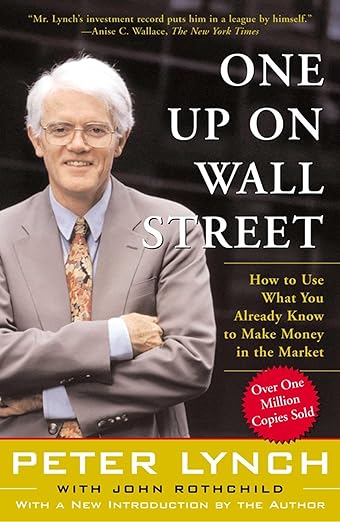
One Up On Wall Street
Investment classic that teaches how to beat the market by finding undervalued stocks through real-world analysis.
View on Amazon
