

Remote Work & Digital Nomad Guide · 2026
Remote Work & Digital Nomad Lifestyle in 2026: Jobs, Visas, Cities, Tools & Real-World Systems
Your complete guide to working remotely, going location-independent, and building a sustainable nomadic lifestyle in 2026—backed by current data, visa frameworks, and real-world systems.
Introduction: The Structural Shift in How We Work
Remote work is no longer temporary. The data is unequivocal: what began as an emergency response to a pandemic has become a permanent restructuring of the global labor market. By 2025, approximately 28% of paid workdays in the United States were performed remotely—a fourfold increase from the pre-pandemic baseline of 5–7%[1]. Globally, the structural shift is equally profound. An estimated 92 million digital jobs will exist worldwide by 2030, with roughly 25% more role categories becoming location-independent than existed just three years ago[2].
This is not disruption. This is realignment.
For the first time in history, your income is decoupled from your geography. You can live in Lisbon while earning Silicon Valley salaries. You can operate a London-based consultancy from Bali. You can build a career without ever stepping into a corporate office.
Recommended Resource
Discover exclusive access to this recommended platform. Click below to explore more.

But this freedom comes with complexity. Working remotely means navigating visa regimes, managing across time zones, ensuring cybersecurity in untrusted networks, optimizing for productivity without office boundaries, and making strategic decisions about taxes, insurance, and banking in foreign jurisdictions.
This guide provides a complete, practical system for remote work and digital nomad living in 2026. Whether you’re a salaried employee transitioning to hybrid arrangements, a freelancer looking to go location-independent, or an adventurer plotting a multi-city nomadic lifestyle, you’ll find actionable frameworks, current data, and real-world solutions here.
Remote Work vs. Digital Nomadism: Clarifying the Distinction
These terms are often conflated, but they describe fundamentally different arrangements.
Definitions and Key Differences
Remote Work is a work arrangement—you perform your job from a location outside a traditional office. You may work from a home office, a coffee shop, a coworking space, or a café in another city. The defining feature is location independence from your employer’s headquarters, not geography independence for yourself.
Digital Nomadism is a lifestyle arrangement—you travel between cities or countries while maintaining work and income. A digital nomad is location-independent in the truest sense: they may spend 2 months in Bangkok, 1 month in Lisbon, 3 weeks in Mexico City. The work itself may be remote, freelance, or contract-based.
| Characteristic | Remote Employee | Freelancer/Contractor | Digital Nomad |
|---|---|---|---|
| Employer Type | Single company | Multiple clients/companies | Self-managed portfolio |
| Schedule | Fixed, usually | Variable | Highly flexible |
| Location | Stable (usually home) | Flexible | Frequently changing |
| Visa Status | May need visa sponsorship | Visa-dependent | Digital nomad visa or tourist |
| Benefits | Employer-provided | Self-funded | Self-funded |
| Income Stability | Stable | Project-based | Variable |
Who Each Model Suits Best
Remote Employee Model Works For:
- People seeking stability (predictable paycheck, benefits)
- Those in stable relationships or with family obligations
- Workers prioritizing employer healthcare and retirement contributions
- Professionals in specialized fields with concentrated hiring markets
- Anyone uncomfortable with self-employment
Digital Nomad Model Works For:
- Self-directed individuals comfortable with uncertainty
- Freelancers, consultants, coaches, and content creators
- People seeking adventure and cultural immersion
- Those optimizing for lifestyle over maximum income
- Workers in fields where location truly doesn’t matter (software, design, writing, marketing)
Common Misconceptions Debunked
Misconception 1: “Digital nomads are always traveling.”
Reality: Most successful digital nomads spend 2–4 weeks per location, not a different city every week. Constant movement is exhausting and unproductive.
Misconception 2: “Remote work means zero boundaries.”
Reality: Remote work requires stricter boundaries than office work. Without physical separation, burnout happens faster.
Misconception 3: “Digital nomads earn less than office workers.”
Reality: Digital nomads often negotiate higher rates (clients expect premiums for location flexibility). The issue is inconsistency, not ceiling.
The Global Remote Work Market in 2026: Size, Growth, and Adoption Patterns
The remote work market has stabilized at a new equilibrium. After the pandemic surge and the 2023–2024 “hybrid creep” (employer-mandated office returns), the dust has settled. The current state reflects genuine adoption, not COVID panic.
Market Size and Growth
By early 2025:
- Approximately 80% of employees whose jobs can be performed remotely are working either full-time remote (26%) or hybrid (52%)[7]
- Global average work-from-home frequency: 1.27 days per week (down from 1.6 in 2022, reflecting employer pressure, but stable since 2024)[8]
- Regional variation is significant: English-speaking economies (US, UK, Australia, Canada) average 1.5–2 WFH days per week; Asia averages 0.5–1 day per week; Latin America shows 74% worker preference for hybrid/remote[9]
Industries and Roles Hiring Remotely
Remote hiring concentrates in knowledge work:
- Software Development & Engineering – 95%+ remote capability
- Product Management – 85%+ remote
- Marketing & Content – 80%+ remote
- Design (UX/UI, Graphic) – 90%+ remote
- Writing & Editorial – 95%+ remote
- Customer Support & Success – 70% remote (async-friendly roles)
- Data Analysis & AI/ML – 85%+ remote
- Sales – 50–60% remote (depends on account type)
- Finance & Accounting – 60% remote (compliance-driven constraints)
- Project Management & Operations – 75% remote
Employer Adoption and Philosophy Shift
Companies have moved beyond “remote as a perk” to “remote as a competitive necessity”:
- 80%+ of employers say remote options improved their ability to attract top talent—particularly critical given talent shortages in specialized fields[10]
- Hybrid has become the default, with 64% of companies requiring 1–3 office days per week, while ~30% are pushing for full five-day office returns[11]
- Cost savings are real but secondary: For every 1 percentage-point increase in remote work adoption, labor cost growth drops 0.1 percentage points and office real estate costs drop 0.4 percentage points[12]
- Productivity gains are measurable: For every 1 percentage-point increase in remote work, total factor productivity (TFP) rises 0.05–0.09 points[13]
The Bottom Line: Remote work is now a structural economic reality, not a temporary policy. Companies that attempt to eliminate it face talent exodus; those that embrace it gain competitive advantage.
Looking to build a future-ready career? Explore the complete Remote Work & Global Careers 2026 guide to discover proven strategies for landing high-paying remote roles worldwide.
How to Find Remote Jobs: A Step-by-Step System
This is the highest-value section for job seekers. The barrier to remote work is not availability (tens of thousands of positions exist daily), but knowing how to find legitimate opportunities and position yourself effectively.
Types of Remote Positions
Before searching, understand what you’re looking for:
Full-Time Remote Employee
- Traditional employment with one company
- Benefits, equity (potentially), stable paycheck
- Pros: Security, benefits, full-time income
- Cons: Less flexibility, employer control over hours/systems
- Best Platforms: FlexJobs, LinkedIn, Traditional job boards (filtered for remote)
Contract/Part-Time Remote
- Fixed-term engagements (3–12 months typically)
- Usually project-based
- Pros: Flexibility, variety, higher hourly rates often
- Cons: Income instability, no benefits, contract gaps
- Best Platforms: Toptal, Gun.io, Expert.com, LinkedIn
Freelance/Per-Project
- You invoice per deliverable or hourly
- Smallest guaranteed commitment
- Pros: Complete flexibility, multiple clients, highest hourly rates possible
- Cons: Income highly variable, client churn, admin overhead
- Best Platforms: Upwork, Fiverr, Guru, Freelancer.com, Contra
Digital Nomad Roles (Remote + Location-Independent)
- Same as above but specifically seeking individuals who travel
- Companies often prefer nomads due to timezone spread
- Pros: Full location freedom, often attract nomad-friendly benefits (visa support, travel stipends)
- Cons: Same instability as other remote/freelance work
- Best Platforms: Nomad List Jobs, Remote.co, We Work Remotely (filter for nomad-friendly)
Skills Most Attractive to Remote Employers
Remote hiring priorities differ from office hiring. Employers cannot supervise, so they prioritize:
- Communication Skills – Ability to write clearly, give context, reduce ambiguity
- Self-Direction – Proven ability to manage time and projects without supervision
- Async Capability – Comfort with delayed feedback, working across timezones
- Problem-Solving – Ability to resolve issues independently before asking
- Technical Writing – For nearly all remote roles, written clarity is critical
- Time-Zone Flexibility – Willingness to work occasional off-hours if needed
- Reliable Internet Setup – No excuses for disconnects
- Track Record – Remote employers heavily weight past performance (references, portfolio)
Technical skills matter less than soft skills in remote hiring. A mediocre developer who communicates clearly beats a brilliant developer who vanishes into meetings.
Resume and Portfolio Optimization for Remote Hiring
Your Resume Should Signal:
- Remote-specific achievements: “Led distributed team of 5 contractors across 3 timezones,” “Managed 100% async communication with clients in 8 countries”
- Communication capability: Examples of written communication impact, documentation, training materials
- Time-zone proven experience: Any previous remote, distributed, or freelance work
- Tools proficiency: Async tools (Notion, Asana, Slack, GitHub, Figma) matter more than office tools
Your Portfolio Must Include:
- Case studies with outcomes: Not “I designed this”—”I designed this, traffic increased 40%, revenue impact $200K+”
- Writing samples: Most remote positions require clear communication. If you’re a designer, include a brief written case study
- Live work: Link to live projects (live website, app, course, content)—not PDFs
- GitHub (if developer): Repository activity signals remote-ability (commit messages, documentation, async collaboration)
Finding Remote Job Opportunities
Tier 1 Platforms (Most Legitimate)
- FlexJobs – Curated, all jobs vetted (paid membership, ~$15/month)
- LinkedIn – Filter: “Remote” location; follow “remote work” job alerts
- We Work Remotely – Exclusively remote, quality standard high
- Remote.co – Established, trustworthy, niche by role
- Nomad List Jobs – Digital nomad specific
Tier 2 Platforms (Higher Volume, More Noise)
- Indeed – Set “Remote” location filter
- Upwork – Freelance/contract; spend time on profile and first bids
- Toptal – Higher barrier to entry, but higher-quality clients and pay
- Gun.io & Expert.com – Developer-specific; vetted networks
Tier 3 Platforms (Niche, Industry-Specific)
- Software developers: HackerNews “Who’s Hiring” thread (monthly), Stack Overflow Jobs, GitHub Jobs
- Designers: Dribbble (jobs section), Designer Hangout community
- Writers: ProBlogger, Contently, CopyBlogger, freelance boards
- Customer Success: Success League community, Intercom job board
- Marketing: GrowthHackers, Digital Marketing Institute job board
Red Flags and Scams to Avoid
Before applying anywhere, watch for these warning signs:
- No personal recruiter name – “Hiring Manager” or “Recruiter” = often bots or scams
- Generic job description – Real remote jobs are specific about timezone, skills, async communication
- Unusual payment methods – If they ask you to wire fees upfront or use crypto, it’s a scam
- Grammar and formatting issues – Legitimate companies proofread job postings
- Requires personal info upfront – SSN, banking details before interview = fraud
- Too-good-to-be-true pay – “$100/hour for data entry” does not exist
- No company website or .com email – @gmail.com emails from “company” = red flag
- Interview via chat only, no video – Some remote roles don’t require video, but legitimate ones do at least once
How to Verify a Job Opportunity
- Google the company name + “scam” or “reviews”
- Check their official website domain
- Reverse-image search the hiring manager photo
- Ask for a video interview before investing time
- Never pay upfront for a job opportunity
Interview Expectations for Remote Roles
Remote interviews differ from office interviews:
- More interviews typically: 3–5 rounds instead of 2–3 (need to assess async communication)
- Technical assessments: Expect take-home projects (1–2 hours, sometimes longer)
- Communication assessment: Some roles include a writing test or presentation
- Team/cultural fit: Heavy emphasis—your coworkers will never meet you in person, so fit matters more
- Trial period: Some roles offer 2-week paid trial before commitment
Questions to Ask in Remote Role Interviews:
- “How do you measure success for someone in this role remotely?”
- “What does a typical async workday look like?”
- “How often are synchronous meetings required?”
- “What tools do you use for async communication?”
- “How is feedback delivered in this role?”
- “What timezone is the team in, and what overlap is expected?”
Remote Work Setup and Productivity Systems
Setting up for remote work is not just about buying a good laptop. Sustainable remote work requires attention to health, ergonomics, tools, and psychological boundaries.
Essential Tech Stack
Non-Negotiable Equipment
Reliable Laptop
- Budget setup: Chromebook ($300–500) or refurbished ThinkPad X1
- Professional setup: MacBook Pro, ThinkPad X1, or equivalent ($1,000–1,500)
- Don’t skimp; you’ll use this 8 hours per day
Backup Internet
- Primary: Home broadband (minimum 10 Mbps)
- Backup: Mobile hotspot with sufficient data plan ($20–50/month)
- Internet failures will happen. Have a backup.
Ergonomic Setup
- Monitor (24–27″): $150–300
- External keyboard: $50–150
- Mouse: $20–80
- Desk: $200–600
- Chair: $250–800 (critical; cheap chairs cause back pain)
- Laptop stand: $30–100
Communication Tools
- Video conferencing: Zoom (likely prescribed by employer)
- Messaging: Slack, Microsoft Teams (employer-determined)
- Email: Your company email + backup Gmail account
Nice-to-Have
- Noise-canceling headphones ($200–400)
- Webcam upgrade (if laptop webcam is poor)
- Ring light (for video calls)
- External SSD for backups ($80–150)
- Standing desk ($400–1,500)
Ergonomic Setup for Long-Term Health
If you work remotely for years, poor ergonomics will catch up with you. The most common issues:
- Lower back pain (cheap chair)
- Neck/shoulder strain (monitor too low/far)
- Wrist/carpal tunnel (poor keyboard position)
- Eye strain (monitor too close or bright)
The 20-Minute Rule: Every 20 minutes, look at something 20+ feet away for 20 seconds. This prevents eye strain.
Correct Monitor Height: Top of monitor should be at or slightly below eye level when you’re sitting straight. This prevents neck strain.
Keyboard/Mouse Position: Elbows at 90 degrees, wrists neutral (not bent up or down).
Sit-Stand Combo: If possible, alternate between sitting and standing desk every 1–2 hours.
Productivity Frameworks for Remote Work
The biggest remote work pitfall: absence of structure leads to absence of focus.
Time-Blocking System
- Break your day into focused blocks (90 minutes works for most people)
- Each block: 1 primary task, 10-minute break after
- Deep work 9 AM–12 PM, admin/calls 2–4 PM, urgent items 4–5 PM
- Protect your deep work time fiercely
Async-First Communication
- Slack is not email. Don’t expect immediate responses.
- Write complete context in first message (not “hi” then 5 follow-ups)
- Summarize decisions and action items in writing
- Schedule synchronous meetings only when necessary
Outcome-Based Work
- Define daily outcomes by 9 AM
- Measure yourself by outcomes, not hours logged
- Report progress asynchronously (weekly summary email)
Anti-Burnout Protocol
- Strict off-hours: After 6 PM, no work messages or email
- Full days off: At least 1 day per week genuinely off (no email, no Slack)
- Change of scenery: 2–3 days per week in coworking space or café
- Monthly review: Are you progressing toward goals? Overworking?
Conclusion and Action Plan
You now have a complete framework for remote work and digital nomadism in 2026. This is not theoretical—it’s based on current market data, visa information as of January 2026, and real-world systems used by hundreds of thousands of remote workers globally.
The path forward is not complicated, but it is deliberate.
Your 30-Day Starter Roadmap
Week 1: Foundation
- Assess your skills: Which of the remote-friendly roles fit your background?
- Evaluate current job: Is it remote-capable? Have the conversation with your employer.
- Set up digital banking: Open Wise account or specialist digital bank
- Research health insurance: Get quote from IMG Global or Allianz for your age/profile
Week 2: Job Search (If Applicable)
- Update resume/LinkedIn with remote-specific achievements
- Build portfolio: If freelancer, create 2–3 case studies
- Sign up for job platforms: FlexJobs, We Work Remotely, LinkedIn
- Apply to 5 positions that genuinely fit your skills
Week 3: Setup
- Order ergonomic equipment: External monitor, keyboard, chair
- Download productivity tools: Password manager, VPN, backup software
- Visit local coworking: Try trial day, explore 2–3 spaces
- Plan your first month: Where would you like to be?
Week 4: Commitment
- Make a decision: Remote employee, freelancer, or nomadic path?
- Sign up for digital nomad visa (if applicable)
- Book accommodation in your first location
- Schedule first week of remote work
Final Thoughts
The barrier to remote work is no longer opportunity—it’s self-direction. The jobs exist (100+ million globally). The tools exist (Zoom, Asana, Notion). The visas exist (66+ countries). The obstacles are psychological: fear of instability, concern about isolation, uncertainty about your own discipline.
The data says this unequivocally: Remote workers are more productive, more satisfied, and more loyal than office workers. You’re not sacrificing performance; you’re upgrading it.
Start small. Test the model. Work remote from your current city for 3 months before going nomadic. Document what works, what doesn’t. Build systems incrementally. Find your rhythm.
The remote work revolution is not coming; it’s here. The question is not whether to participate, but how.
References
- U.S. Bureau of Labor Statistics. (2024). Telework in the United States: 2023. https://www.bls.gov/news.release/pdf/atus.pdf
- Ginitalent. (2025). Remote Work Trends 2026: How Global Teams Are Reshaping the Future of Work. https://ginitalent.com/remote-work-trends-2026-how-global-teams-are-reshaping-the-future-of-work/
- Ginitalent. (2025). Remote Work Trends 2026.
- Archie. (2025). The Latest Remote Work Statistics and Trends [2026]. https://archieapp.co/blog/remote-work-statistics/
- Archie. (2025). Remote Work Statistics [2026].
- Archie. (2025). Remote Work Statistics [2026].
- Archie. (2025). Remote Work Statistics [2026].
- Emapta. (2026, January 11). 20 Remote Work Statistics & Trends for 2026. https://emapta.com/blog/remote-work-statistics/
- Emapta. (2026). Remote Work Statistics & Trends for 2026.
- Archie. (2025). Remote Work Statistics [2026].
- Ginitalent. (2025). Remote Work Trends 2026.
- Archie. (2025). Remote Work Statistics [2026].
- Archie. (2025). Remote Work Statistics [2026].
- Ginitalent. (2025). Remote Work Trends 2026.
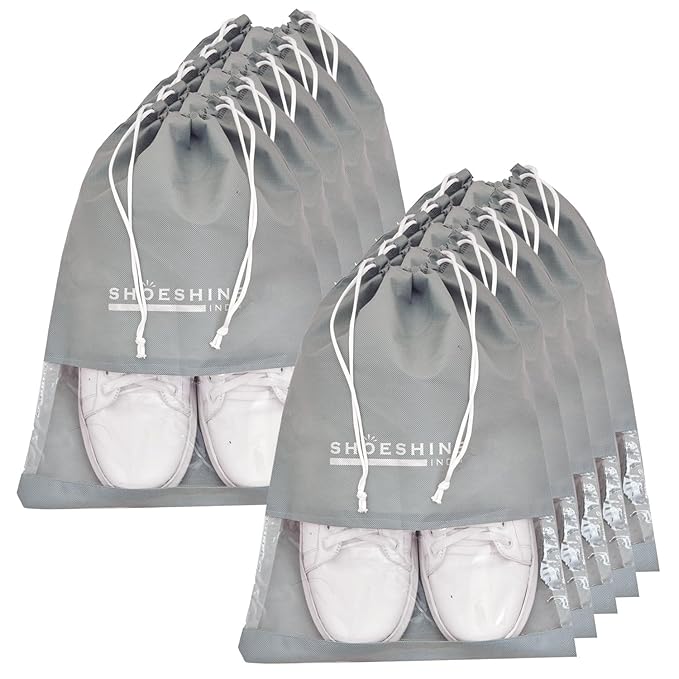
SHOESHINE Shoe Bag for Travel (Pack of 10)
Transparent shoe storage pouches for men and women. Ideal for travel, luggage organization, and keeping shoes separate from clothes.
Check Price on Amazon

American Tourister Ivy Nxt 68cm Spinner Trolley
Medium-sized hard luggage with 4-wheel spinner, durable polycarbonate body, and mounted TSA lock—perfect for check-in travel.
View on Amazon
Fur Jaden 55L Travel Backpack with Shoe Compartment
Large-capacity rucksack designed for trekking, hiking, and travel. Includes a dedicated shoe compartment and ergonomic support.
Check Price on Amazon
