

Pre Tied vs Zipper vs Clip On Tie Professional Guide
If you’re wondering whether pre-tied, zipper, or clip-on ties are professional, the answer isn’t a simple yes or no. These convenience options have their place — but their suitability depends on context, industry, and dress code expectations. Traditionally, a classic *self-tied tie* — like the ones you’ll master in our Complete Tie Knot Guide — remains the most universally accepted professional choice.
🔹 Zipper Ties — maintain a tied appearance with ease; acceptable in many office and semi-formal environments.
🔹 Clip-On Ties — practical and fast, but often seen as more casual or utility-oriented, especially in security, school, or uniformed roles.
In this complete guide, you’ll discover not just whether these tie types are professional — but *when and where* they are appropriate, how each style compares to a normal tie, and what hiring managers or dress codes typically expect.
We’ll also cover industry-specific recommendations so you can choose confidently for interviews, corporate workplaces, casual offices, and formal events.


What Is a Pre-Tied Tie? And Is It Professional?
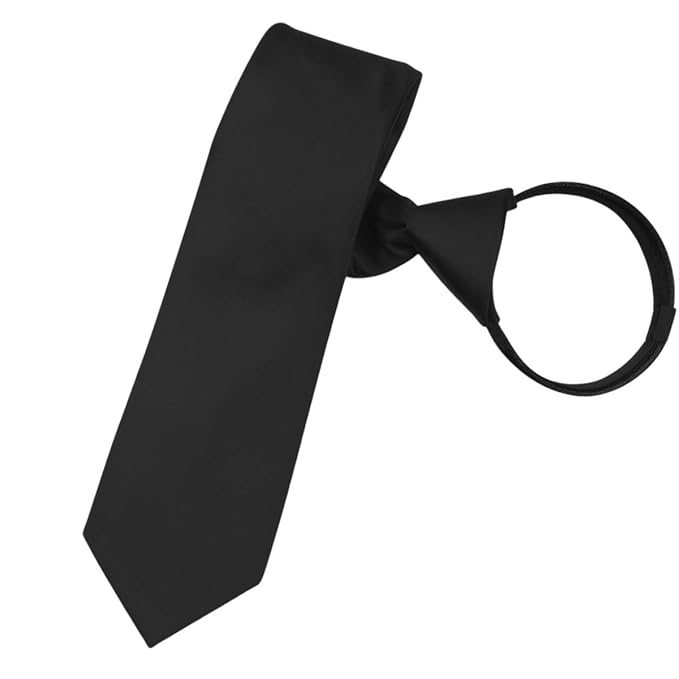
A pre-tied tie is a necktie that comes with the knot already formed and stitched into place. Instead of tying the knot manually, you simply adjust the neck strap — usually via a hook or elastic band — and secure it around your collar.
Visually, a pre-tied tie can look identical to a traditional self-tied tie from a distance. However, closer inspection often reveals differences in knot structure, fabric fold depth, and overall authenticity.
Why People Choose Pre-Tied Ties
✔ Convenience
Pre-tied ties eliminate the need to learn knot techniques. They are ideal for those who struggle with tying a tie or need a quick solution.
✔ Consistent Appearance
The knot remains perfectly symmetrical every time, reducing the risk of uneven or poorly formed knots.
✔ Time Saving
For busy professionals or students, pre-tied ties reduce preparation time significantly.
✔ Good for Teens & School Uniforms
Pre-tied ties are common in school environments and entry-level professional contexts.
Professional Perception in Corporate Settings
In conservative industries such as banking, law, consulting, and executive corporate roles, pre-tied ties may be perceived as less refined. Senior professionals often value traditional craftsmanship, including the ability to tie a proper knot.
While most interviewers will not inspect your knot closely, subtle cues like depth, dimple formation, and natural fabric drape can signal authenticity.
Are Pre-Tied Ties Acceptable for Interviews?
For corporate or finance interviews, a traditional self-tied tie is recommended. However, in tech or creative roles where dress codes are more relaxed, a high-quality pre-tied tie may not negatively impact your appearance — provided it fits properly and matches the environment.
The key issue is not convenience — it is perception. A poorly made pre-tied tie with a flat or artificial-looking knot can appear less polished.
When a Pre-Tied Tie Makes Sense
- Teen professionals or first-time interview candidates
- Formal school events
- Uniform-based roles
- Individuals with limited time or dexterity challenges
When to Avoid It
- High-level corporate interviews
- Executive board meetings
- Formal black-tie events
- Industries with strict dress culture
Ultimately, professionalism depends more on overall presentation than tie type alone. But in environments where tradition matters, a self-tied knot signals greater polish and attention to detail.
What Is a Zipper Tie? And Is It Professional?
A zipper tie looks like a traditional necktie from the front, but instead of manually tying and adjusting the knot each time, it uses a hidden zipper mechanism on the back. The knot is pre-formed, and the tie can be tightened or loosened by sliding the zipper mechanism up or down.
Unlike fully pre-tied or clip-on ties, zipper ties allow the knot to sit naturally against the collar while maintaining consistent symmetry. Because of this, many people consider zipper ties a middle ground between convenience and professionalism.
How Zipper Ties Work
The zipper mechanism is concealed behind the knot. Once placed around the neck, the wearer pulls the zipper to tighten the tie to the collar. When removing it, the zipper slides downward to loosen the knot without untying it.
This design preserves the structure of the knot, ensuring a consistent appearance every time. Unlike elastic-band pre-tied ties, zipper ties tend to sit more securely and naturally around the neck.
Advantages of Zipper Ties
✔ Professional Appearance
From the front, zipper ties often look nearly identical to self-tied ties, especially when made from quality silk or microfiber.
✔ Quick Adjustment
They allow fast tightening and removal without needing to redo the knot.
✔ Consistent Knot Shape
The knot remains symmetrical and neat every time, reducing errors in presentation.
✔ Suitable for Daily Office Wear
Many office professionals use zipper ties discreetly for convenience.
Disadvantages Compared to a Normal Tie
While zipper ties are more refined than clip-ons, they still lack the natural drape and subtle imperfections of a hand-tied knot. Experienced professionals may notice the uniformity and reduced knot depth.
Additionally, lower-quality zipper mechanisms may create stiffness around the collar or slight bulk at the back of the knot.
Zipper Tie vs Normal Tie: Which Is Better?
A normal self-tied tie offers greater flexibility in knot style (Four-in-Hand, Half Windsor, Full Windsor) and signals traditional professionalism. It also creates a more natural knot dimple and fabric flow.
A zipper tie, however, offers speed and reliability. For mid-level office environments or less formal industries such as technology or sales, zipper ties are often acceptable if the material and color are appropriate.
Are Zipper Ties Good for Interviews?
In conservative industries like banking, consulting, law, or government, a traditional self-tied tie is recommended for interviews.
In technology, startups, and more relaxed corporate environments, a high-quality zipper tie may not negatively impact your candidacy — provided it matches the dress code and appears polished.
Ultimately, the difference is subtle but meaningful in high-trust environments. If aiming for maximum professionalism, a self-tied knot remains safest.
What Is a Clip-On Tie? And Is It Professional?
A clip-on tie is a pre-formed necktie that attaches directly to the shirt collar using a metal or plastic clip instead of wrapping around the neck. Unlike zipper or traditional ties, clip-on ties do not loop around the collar — they fasten to the front of the shirt.
Clip-on ties are most commonly associated with school uniforms, hospitality roles, and certain security or law enforcement positions. However, many adults consider them for convenience or emergency situations.
Why Clip-On Ties Exist
Clip-on ties were originally designed for safety and efficiency. In professions where physical confrontation is possible — such as law enforcement, correctional facilities, or certain hospitality roles — a clip-on tie can detach if pulled, preventing injury.
They are also common for children and teenagers who may not yet know how to tie a traditional knot.
Advantages of Clip-On Ties
✔ Instant Wear
Clip-on ties can be attached in seconds without adjustment.
✔ Safety Feature
Designed to detach if pulled forcefully, making them safer in high-contact environments.
✔ Uniform Standardization
Ensures consistent appearance across staff or students.
✔ Good for Young Professionals
Suitable for teenagers attending formal school events.
Professional Perception in Corporate Settings
In traditional business environments, clip-on ties are often viewed as less sophisticated. The visible clip mechanism and rigid knot structure can reduce the natural drape associated with a self-tied tie.
While most interviewers may not explicitly comment on it, subtle visual cues influence perception. In high-trust industries such as finance, consulting, or executive leadership roles, traditional ties are strongly preferred.
Clip-On Tie for Interview: Is It Acceptable?
For corporate, banking, law, or government interviews, a clip-on tie is generally not recommended. These industries value tradition and polished presentation.
For entry-level retail, hospitality, or uniform-based roles, a clip-on tie may be acceptable if it matches the company dress code.
In technology startups or creative industries, ties themselves may not even be required — but if worn, a traditional tie still communicates stronger professionalism.
When Clip-On Ties Are Appropriate
- Security or safety-sensitive professions
- School uniforms and student events
- Young children or teens
- Emergency backup situations
When to Avoid Clip-On Ties
- Corporate job interviews
- Executive meetings
- High-level business presentations
- Formal black-tie events
Ultimately, clip-on ties serve a purpose — but in most professional environments, a traditional self-tied tie signals higher refinement and confidence.
Pre-Tied vs Zipper vs Clip-On Tie: Which Is Most Professional?
If you’re deciding between convenience and tradition, this side-by-side comparison clarifies which tie type works best for interviews, office settings, and formal occasions.
| Feature | Pre-Tied | Zipper | Clip-On |
|---|---|---|---|
| Professional Appearance | Moderate | High (if quality) | Low–Moderate |
| Best For | School, casual office | Daily office wear | Uniforms, security |
| Interview Suitability | Depends on industry | Acceptable in many fields | Not recommended (corporate) |
| Ease of Use | Very Easy | Easy | Instant |
| Executive Settings | Rarely preferred | Sometimes acceptable | Generally avoided |
| Overall Professional Score | 6/10 | 8/10 | 4/10 |
Pre-Tied Tie
Moderately ProfessionalBest for students and semi-formal settings. May be acceptable in relaxed industries but not ideal for executive roles.
Zipper Tie
Most Professional Convenience OptionClosest in appearance to a normal tie. Suitable for many offices and some interviews.
Clip-On Tie
Limited Professional UsePrimarily used for uniforms or safety roles. Not recommended for corporate interviews.
For maximum professionalism, a traditional self-tied tie remains the safest choice. However, zipper ties offer the strongest balance between convenience and appearance.
Are Pre-Tied, Zipper, or Clip-On Ties Professional for Interviews?
When preparing for an interview, presentation communicates seriousness before you speak. While convenience ties may look similar at first glance, their professional acceptability varies significantly depending on industry culture and expectations.
Below is a practical industry breakdown to help you decide which tie type is appropriate.
Corporate & Consulting
Clip-On: Not Recommended Pre-Tied: Use Caution Zipper: AcceptableTraditional industries value detail and convention. A self-tied tie remains safest. Zipper ties may pass if high quality. Clip-ons are generally avoided.
Banking & Finance
Clip-On: Avoid Pre-Tied: Avoid Zipper: LimitedConservative environments favor tradition. A hand-tied knot signals refinement and seriousness.
Government & Public Sector
Clip-On: Usually Avoid Pre-Tied: Situational Zipper: AcceptableProfessionalism and neutrality matter. Zipper ties may work if neat and conservative.
Technology & Startups
Clip-On: Situational Pre-Tied: Acceptable Zipper: AcceptableDress codes are more flexible. Fit, cleanliness, and color matter more than tie type.
Retail & Hospitality
Clip-On: Acceptable Pre-Tied: Acceptable Zipper: AcceptableUniform-based roles commonly use clip-ons for safety and standardization.
Executive-Level Roles
Clip-On: Avoid Pre-Tied: Avoid Zipper: RareHigh-level leadership roles favor traditional self-tied knots. Attention to craftsmanship reflects authority.
If you want maximum safety across all industries, choose a traditional self-tied tie. Zipper ties provide a strong compromise. Clip-ons should be reserved for uniforms or safety-based roles.
When Convenience Ties Are Actually a Smart Choice
While traditional self-tied ties remain the gold standard in many professional environments, convenience options are not inherently unprofessional. In fact, there are situations where pre-tied, zipper, or clip-on ties are practical and appropriate.
Understanding when convenience outweighs tradition allows you to make informed choices without compromising professionalism.
Students & First-Time Interview Candidates
AppropriateTeenagers and early-career professionals may not yet be confident tying traditional knots. A high-quality pre-tied or zipper tie can provide a polished look without stress.
Uniform-Based Professions
Common PracticeRetail, hospitality, aviation, and security industries frequently use clip-on or zipper ties for consistency and safety.
Safety-Sensitive Roles
RecommendedIn roles where physical contact may occur, clip-on ties prevent choking hazards and improve safety compliance.
Time-Critical Situations
PracticalIf you’re traveling or preparing under time pressure, zipper ties offer reliability without sacrificing appearance.
Dexterity or Accessibility Needs
Inclusive OptionFor individuals with limited hand mobility or disabilities, convenience ties provide accessibility while maintaining formal appearance.
Backup or Emergency Use
AcceptableKeeping a zipper tie as a backup in your office or travel bag ensures you’re prepared if your main tie becomes wrinkled or damaged.
Professionalism is not defined solely by tie mechanics — it is defined by overall presentation, fit, cleanliness, and industry alignment. In appropriate contexts, convenience ties can serve a practical and respectable purpose.
When Pre-Tied, Zipper, or Clip-On Ties Can Look Unprofessional
Convenience ties are practical, but context determines perception. In high-stakes environments, small visual cues influence credibility. A poorly chosen tie type can unintentionally signal inexperience or lack of attention to detail.
1. Visible Mechanical Elements
If a clip, zipper track, or rigid backing becomes noticeable, it reduces visual authenticity. Interviewers may not consciously identify the mechanism, but subtle irregularities affect overall impression.
2. Poor Fabric Quality
Many low-cost convenience ties use overly shiny polyester. Under office lighting or video interviews, glossy fabrics reflect harshly and appear inexpensive.
3. Ill-Fitting Knot Proportion
Pre-formed knots may not match your collar spread. If the knot appears too small or too bulky relative to your shirt, it looks disproportionate.
Executive & C-Suite Interviews
Leadership roles emphasize tradition and craftsmanship. A self-tied knot communicates precision and attention to detail.
High-Level Banking & Finance
Conservative industries often view tradition as stability. Deviations may subtly reduce perceived credibility.
Formal Black-Tie Events
Clip-on or zipper ties are inappropriate for formal evening events that require specific dress standards.
Luxury Client-Facing Roles
In luxury consulting, high-end sales, or elite hospitality, subtle craftsmanship signals professionalism.
Convenience ties are tools — not shortcuts. When used appropriately and in alignment with industry expectations, they can function effectively. When used in highly traditional environments, they may unintentionally signal inexperience.
Final Verdict: Pre-Tied vs Zipper vs Clip-On — Which Should You Choose?
Choosing between a pre-tied, zipper, or clip-on tie depends on context, industry expectations, and your personal comfort level. While traditional self-tied ties remain the gold standard across conservative industries, modern convenience options have earned their place in specific professional settings.
The key question is not “Are convenience ties professional?” — it is “Are they appropriate for this environment?”
Choose a Traditional Self-Tied Tie If:
• You are interviewing in banking, finance, consulting, law, or executive roles • You want maximum credibility across all industries • You are attending high-level corporate meetings • You value traditional craftsmanship and full control over knot size
Choose a Zipper Tie If:
• You want convenience with professional appearance • You work in government, retail, hospitality, or general office settings • You need consistent knot symmetry • You want a reliable backup option
Choose a Clip-On Tie If:
• You work in safety-sensitive roles • You wear a uniform-based dress code • You are preparing for school events • You need accessibility due to mobility limitations
Ultimately, professionalism is conveyed through fit, fabric quality, proportion, and confidence — not solely by tie mechanism. A well-fitted suit, appropriate color choice, and composed demeanor matter more than whether the knot was hand-tied or adjusted with a zipper.
However, in conservative environments where subtle details influence perception, traditional presentation still carries symbolic weight. When stakes are high — choose tradition. When practicality matters — choose quality convenience.

