

Interview Dress Code by Industry: Corporate, IT, Startup, Bank & Government
Your interview dress code depends on industry norms, company culture, and regional expectations. Corporate, banking, law, and government sectors require business professional attire (full suits, conservative colors). IT and tech companies accept business casual (collared shirts, trousers, optional blazer). Startups range from smart casual to business casual. Always research the specific company and dress one level more formal than their daily wear.
This comprehensive global guide breaks down exact dress expectations for each industry across the US, UK, Europe, Middle East, and Asia, including regional variations, climate considerations, and remote interview standards. If you’re looking for complete foundational guidance, read our What to Wear to a Job Interview guide before choosing your industry-specific outfit.
Quick Industry Comparison: What to Wear
At a Glance: Interview Dress Code by Industry
- Corporate (Finance, Consulting, Law): Business professional mandatory – full suit, tie for men; pantsuit or skirt suit for women; conservative colors (navy, charcoal, grey)
- Banking & Financial Services: Business professional required – tailored dark suits, polished shoes, minimal accessories; among the strictest dress codes
- IT & Tech Companies: Business casual standard – collared shirts, dress trousers/chinos, blazer optional; tie usually not required; dark jeans acceptable at some casual startups
- Startups & Creative: Smart casual to business casual – research company culture; avoid full suit unless mature startup; dark jeans + blazer often acceptable
- Government & Public Sector: Conservative business professional – full suit or traditional formal attire; strictest grooming standards; Indian ethnic wear widely accepted in India
Universal Rule Across All Industries
When uncertain about interview dress code by industry, choose business professional over casual.
Dressing slightly more formal signals respect, preparation, and seriousness. Across global markets — from corporate offices in New York to financial institutions in London, tech firms in Berlin, or government roles in Asia — professionalism is rarely penalized. Underdressing often is.


Master Comparison Table: Industry Interview Dress Codes
Note: This table provides global defaults. Always research specific company culture and regional variations before your interview.

Corporate Interview Dress Code: Finance, Consulting, Law, Big MNCs
Quick Answer: Corporate interviews require full business professional attire. Men wear dark suits (navy or charcoal), white or light blue shirts, conservative ties, and polished leather shoes. Women wear pantsuits or skirt suits, formal blouses, and closed-toe heels or flats. This is non-negotiable across finance, consulting, law, accounting, and large multinational corporations globally.
Why Corporate Dress Code Is Strictest
Corporate sectors (banking, finance, consulting, law, accounting) maintain the most formal interview dress standards because:
- Client-facing roles: Professionals represent firms to high-net-worth clients, executives, and stakeholders who expect traditional professionalism
- Conservative culture: These industries value tradition, hierarchy, and formal business etiquette
- Trust and credibility: Formal attire signals reliability and competence when handling finances, legal matters, or strategic decisions
- Global standards: Corporate dress codes remain consistent across US, UK, Europe, and Asia—business professional is universal
Corporate Interview Outfit Guidelines
For Men: Full Business Professional
Office & Interview Wear for Men (Professional Picks)
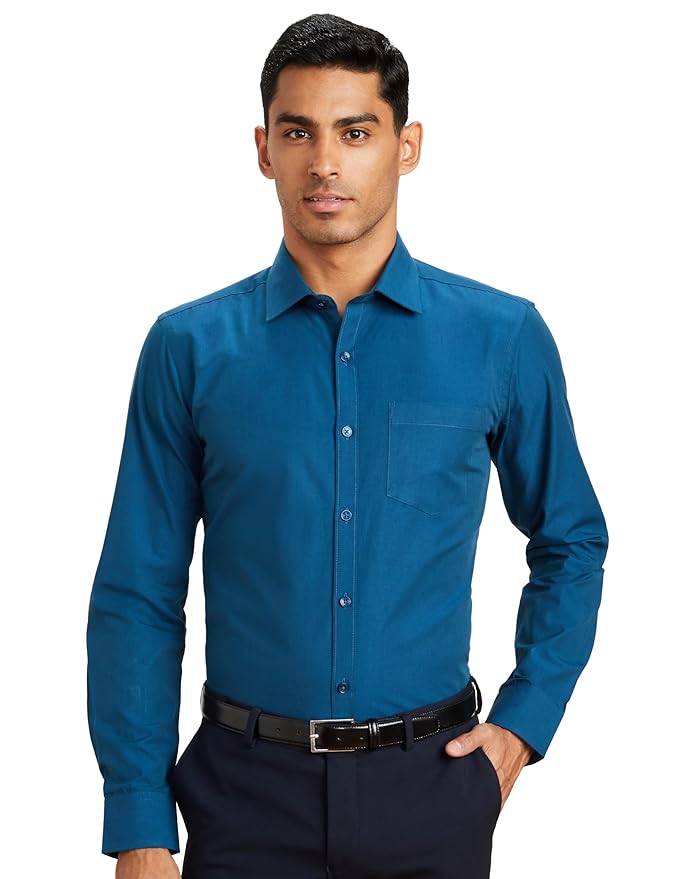
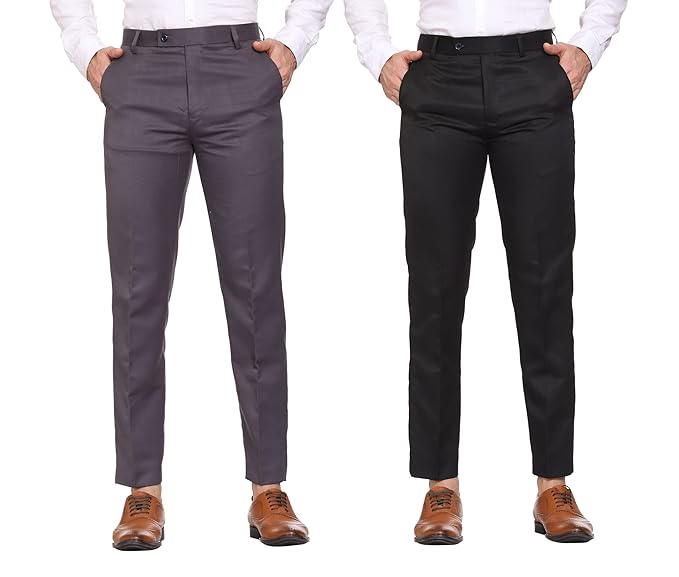
Clean lines. Solid colors. Proper fit. These formal shirts and trousers are ideal for corporate interviews, banking roles, government exams, and executive office environments.


- Suit: Navy or charcoal grey, two-button, single-breasted; ensure perfect fit at shoulders; jacket sleeves end at wrist bone
- Shirt: White or light blue dress shirt, long-sleeve, button-down collar; freshly pressed with no wrinkles; collar should allow one finger space
- Tie: Conservative pattern (navy, burgundy, grey); coordinate with suit but don’t match exactly; tip touches belt buckle; width matches lapel (7-9cm)
- Shoes: Black or dark brown leather Oxfords or Derbys; polished to shine; no visible scuffs or worn heels
- Belt: Leather, matches shoe color, simple buckle without large logos
- Socks: Dark dress socks matching trousers or shoes; high enough to cover ankles when sitting
- Accessories: Simple analog watch or conservative smartwatch; wedding ring acceptable; avoid other jewelry
For Women: Business Professional Options
Stylish Women’s Outfit Picks for Office & Occasions
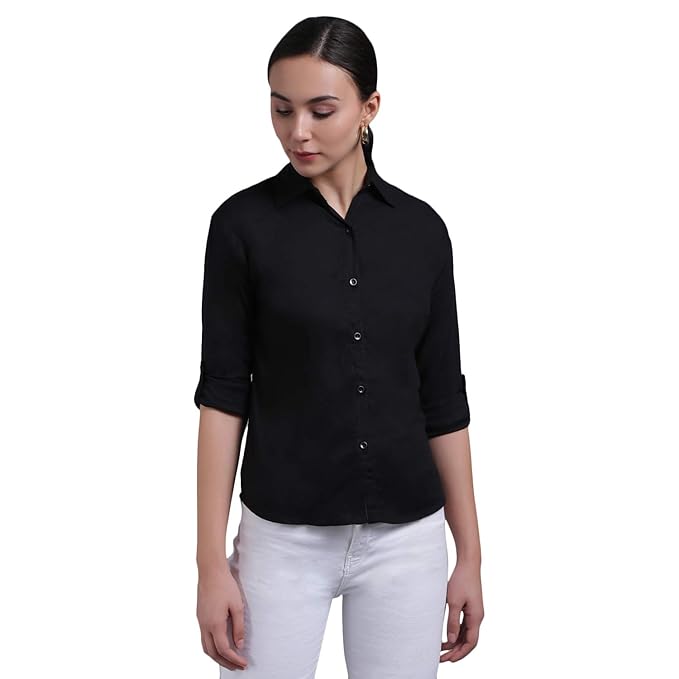
From structured business sets to stylish summer looks — these outfits combine elegance, comfort, and professional appeal for interviews, office days, and smart events.

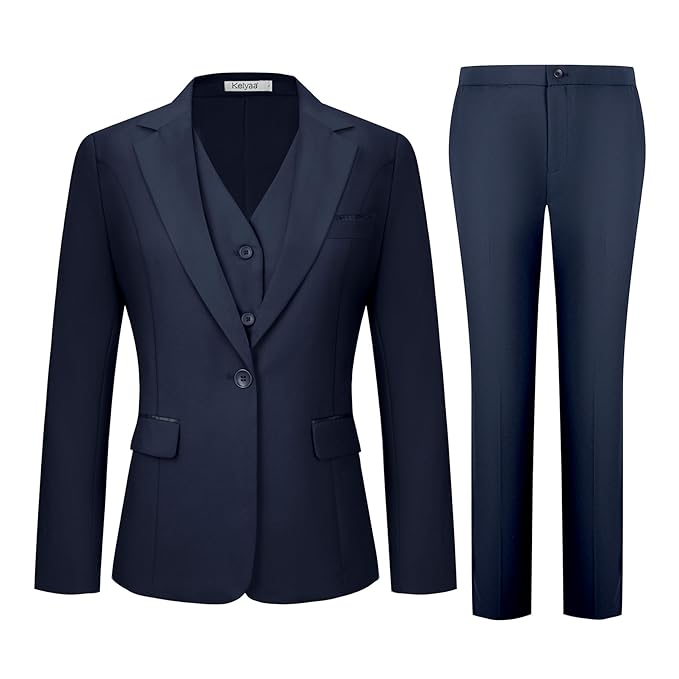
- Suit: Pantsuit (most versatile globally) or skirt suit in navy, charcoal, grey, or black; tailored fit, not tight; jacket buttons comfortably
- Blouse: White, cream, or pastel colors; modest neckline (avoid low-cut or plunging); full or three-quarter sleeves; non-transparent fabric
- Skirt length: Knee-length or slightly below; sits at natural waist; does not ride up when sitting
- Shoes: Closed-toe pumps or flats in black, brown, or nude; heel height 1-3 inches (avoid very high stilettos); clean and polished
- Accessories: Minimal – small earrings, thin necklace, one ring, simple watch; avoid noisy bangles or large statement jewelry
- Handbag: Structured tote or portfolio in neutral color (black, brown, navy); professional appearance, no casual backpacks
Regional Variations in Corporate Dress
Common Corporate Interview Dress Mistakes
What NOT to Wear to Corporate Interviews:
- Business casual instead of business professional (no tie, no blazer, chinos instead of suit trousers)
- Bright colors, loud patterns, or flashy accessories that distract from conversation
- Unpolished or scuffed shoes, open-toe sandals, or casual footwear
- Ill-fitting suits (too tight, too loose, wrong length) – fit matters more than brand
- Visible tattoos or facial piercings in very conservative sectors (cover if possible)
- Strong perfume or cologne (many people are sensitive; use minimal fragrance)
- Unkempt grooming (messy hair, unshaven or patchy facial hair, chipped nail polish)
Tech Interview Dress Code: Software, Engineering & Product (Women)
Tech interviews prioritize competence over appearance — but polished simplicity still signals professionalism. Aim for smart, minimal, and structured styling.


Quick Answer: Tech interview dress code is business casual for most roles. Men wear collared shirts with dress trousers or chinos, leather shoes, and optional blazer. Women wear blouses with trousers, structured dresses with cardigans, or simple formal kurtis. Tie not required. Full suit optional and sometimes seen as out-of-touch at very casual startups. Dark jeans acceptable at some companies when paired with collared shirt and blazer.
Why Tech Dress Code Differs from Corporate
Tech and IT companies have more relaxed interview dress standards because:
- Casual daily culture: Many tech offices allow jeans and t-shirts, so interviews reflect this slightly elevated but still relaxed norm
- Emphasis on skills over appearance: Tech hiring focuses heavily on technical ability, culture fit, and problem-solving rather than formal presentation
- Not client-facing: Most engineering and product roles work internally with teammates, not external clients requiring formal dress
- Innovation culture: Tech companies pride themselves on disrupting traditional norms, including dress codes
Important Exception: Client-facing tech roles (consulting, pre-sales, solutions architects), senior leadership positions, and older enterprise tech companies (IBM-style) still expect business professional or elevated business casual. Research the specific company culture before choosing your outfit.
Tech Interview Outfit Guidelines
For Men: Business Casual Tech Style
- Shirt: Full-sleeve collared shirt in solid color or subtle pattern (white, light blue, pastels, soft grey); polo acceptable at very casual companies
- Trousers: Dress trousers, chinos, or khakis in navy, grey, beige, black; well-fitted and hemmed to proper length
- Blazer: Optional but recommended—instantly elevates look; navy or grey; can remove if interview setting is very casual
- Shoes: Leather shoes, loafers, or very clean leather sneakers (minimalist style like Common Projects, not athletic sneakers)
- Tie: Not required for most tech interviews; add only if interviewing for senior role or if uncertain about formality
- Jeans: Dark, plain, well-fitted jeans acceptable at confirmed casual startups when paired with collared shirt, blazer, and leather shoes (never with t-shirt or athletic shoes)
For Women: Business Casual Tech Style
- Tops: Blouse, structured knit top, or collared shirt in solid colors or subtle patterns; modest neckline
- Bottoms: Dress trousers, chinos, or knee-length skirt in neutral colors; avoid very short skirts
- Dresses: Simple knee-length dress with clean lines; pair with cardigan or blazer for polish
- Shoes: Flats, loafers, low heels (1-2 inches), or clean ankle boots; closed-toe for formal tech companies
- Blazer/Cardigan: Recommended even in casual tech environments—adds professional polish
- Indian option: Simple kurti with formal trousers (not leggings) works well in Indian tech companies
- Jeans: Dark, plain jeans with structured blouse and blazer acceptable at casual startups after verifying culture
When to Wear Business Professional vs Business Casual in Tech
Regional Tech Dress Code Variations
United States (Silicon Valley, Seattle, Austin): Most casual globally; dark jeans + collared shirt + blazer acceptable at many companies; some explicitly say “dress like you would for work” which can mean t-shirt for engineers; default to business casual when uncertain.
UK & Europe: Business casual standard but less tolerance for jeans in interviews than US; collared shirt and trousers safest; blazer recommended.
India & Southeast Asia: Even tech companies skew more formal for interviews; business casual minimum; simple formal kurti acceptable for women; full casual (jeans + t-shirt) rarely appropriate even at startups.
Middle East: Business casual to business professional; modesty standards apply (covered shoulders and knees); less casual than Western tech hubs.
Startup & Creative Interview Dress Code: Early-Stage & Innovation Companies
Quick Answer: Startup interview dress code ranges from smart casual to business casual depending on company maturity and culture. Research company social media extensively before deciding. Dark jeans with collared shirt and blazer often acceptable. Avoid full three-piece suits unless startup is mature with corporate clients. Goal: look polished and authentic, not like you “just rolled out of bed” or overdressed in formal banking attire.
Why Startup Dress Code Is Most Variable
Startup interview dress codes vary dramatically because:
- No standard culture: Early-stage startups (5-50 employees) often have no formal dress policy; founders set tone
- Industry matters: Fintech startups dress more formally than gaming or creative tech startups
- Funding stage: Pre-seed and seed-stage very casual; Series B+ with enterprise clients expect business casual
- Cultural fit testing: Some startups use dress as cultural filter—overly formal suit may signal misalignment
Critical Research Step: Before startup interviews, check:
- Company Instagram and LinkedIn for office photos showing real team attire
- Founder LinkedIn profiles and event pictures (often set dress tone)
- Glassdoor reviews mentioning dress code or culture
- Recruiter guidance—if they say “dress casually,” believe them but step up one level
Startup Interview Outfit Guidelines
For Men: Smart Casual to Business Casual
- Safe choice: Dark jeans or chinos + collared shirt (button-down or polo) + blazer or casual jacket + clean leather shoes or minimalist sneakers
- More formal startup: Dress trousers + collared shirt + blazer (no tie unless fintech or enterprise-focused)
- Very casual startup: Dark jeans + nice t-shirt (solid, no graphics) + blazer + leather shoes (never athletic sneakers)
- Avoid: Full suit with tie (too formal unless mature startup); hoodie and gym shoes (too casual); wrinkled or sloppy clothing
For Women: Smart Casual to Business Casual
- Safe choice: Dark jeans or trousers + structured blouse or top + blazer or cardigan + flats or low heels
- More formal startup: Dress trousers + blouse + blazer; or simple knee-length dress with blazer
- Very casual startup: Smart jeans + nice top (not t-shirt) + blazer or structured cardigan + clean shoes
- Indian option: Simple kurti with well-fitted trousers or smart pants (not leggings)
- Avoid: Full formal pantsuit (may be too stiff); very casual leggings + oversized sweater; athletic wear; crop tops or revealing clothing
Decision Matrix: How Formal Should I Dress for This Startup?
Startup Interview Dress Mistakes:
- Overdressing in formal suit: Signals poor cultural research; may make you seem stiff or out-of-touch
- Underdressing in gym clothes or pajama-like attire: Disrespects opportunity even if office is casual
- Copying employee casual exactly: Interview should be one level above daily wear; if employees wear t-shirts, you wear collared shirt
- Wearing graphics, slogans, or band t-shirts: Even in casual startups, keep shirts solid or minimal
Golden Rule for Startups: When in doubt, choose business casual with dark jeans option. You can always remove a blazer if environment is more casual, but you can’t add formality once you arrive.
Banking & Financial Services Interview Dress Code
Quick Answer: Banking interviews require full business professional attire—this is non-negotiable. Men wear tailored dark suits (navy or charcoal), white or light shirts, conservative ties, and polished leather shoes. Women wear pantsuits or skirt suits in conservative colors, formal blouses, and closed-toe heels or flats. Banking has among the strictest dress codes globally due to client-facing nature and conservative industry culture.
Why Banking Dress Code Is Strictest
Banking and financial services maintain the most conservative interview dress standards across all industries because:
- Trust and credibility: Banks handle clients’ money and financial futures; formal attire signals reliability and competence
- Regulatory environment: Heavily regulated industry values tradition, hierarchy, and conservative presentation
- Client expectations: High-net-worth clients and institutional investors expect bankers to look professional and established
- Global consistency: Banking dress codes remain nearly identical across US, UK, Europe, Asia, and Middle East—business professional is universal standard
Banking Interview Outfit Requirements
For Men: Full Business Professional Mandatory
- Suit: Navy or charcoal grey (black acceptable but navy preferred); single-breasted, two-button; tailored fit with no pulling or bunching
- Shirt: White or light blue dress shirt; long-sleeve, button-down; freshly pressed with crisp collar; no wrinkles or stains
- Tie: Conservative colors (navy, burgundy, grey); subtle patterns acceptable; avoid bright colors or novelty designs; tip touches belt buckle
- Shoes: Black leather Oxfords or Derbys; polished to high shine; no visible wear, scuffs, or worn heels
- Belt: Black leather belt matching shoes; simple buckle without large logos or flashy designs
- Socks: Dark dress socks (black, navy, charcoal) matching trousers; high enough to cover ankles when sitting
- Grooming: Clean-shaven or very well-groomed short beard; neat haircut; trimmed nails; minimal fragrance; no visible tattoos
For Women: Conservative Business Professional
- Suit: Pantsuit or skirt suit in navy, charcoal, grey, or black; tailored fit, not tight; jacket buttons comfortably without pulling
- Blouse: White, cream, or soft pastel; modest neckline (no low-cut or plunging); full or three-quarter sleeves; non-transparent fabric
- Skirt: If wearing skirt suit, knee-length or slightly below; sits at natural waist; does not ride up when sitting; lined properly
- Shoes: Closed-toe pumps or flats in black, brown, or nude; heel height 1-3 inches maximum; clean, polished, no scuffs
- Hosiery: Neutral stockings or tights recommended in very conservative banks; ensure no runs or visible damage
- Accessories: Minimal—small earrings, thin necklace, one ring, simple watch; avoid noisy jewelry, large statement pieces, or multiple rings
- Grooming: Neat hair (open or tied); natural makeup (avoid heavy or dramatic looks); short to medium nails with neutral polish; no visible tattoos
Regional Banking Dress Variations
United States: Navy suits preferred over black; Investment banking (Goldman Sachs, Morgan Stanley) extremely formal; Commercial banking slightly less strict but still business professional mandatory; Tie always required for men.
United Kingdom: Very traditional City of London financial district; Quality tailoring emphasized; Charcoal and navy suits standard; Tie non-negotiable for men; Women often wear hosiery.
Europe: Business professional standard across major financial centers (Frankfurt, Paris, Zurich); Emphasis on quality fabric and conservative styling; Similar to UK standards.
Middle East (Gulf): Conservative business professional with modesty emphasis; Women must cover shoulders and knees, clothing not tight; National dress (kandora for men, abaya for women) acceptable for locals; Expats wear Western business professional.
India & Asia: Full suit standard for Western banks; Traditional formal attire (simple saree, formal salwar-kameez in muted colors) acceptable for women in local banks; Highly conservative expectations; Light-colored shirts common in India due to climate.
Banking Interview Dress Mistakes (Will Cost You the Job):
- Wearing business casual (no tie, no blazer, chinos instead of suit) to banking interviews
- Bright colored shirts or loud patterned ties that distract from professionalism
- Unpolished shoes, open-toe sandals, or casual footwear
- Visible tattoos or multiple piercings (cover tattoos if possible; remove facial piercings except small studs)
- Messy grooming (unkempt hair, unshaven face, chipped nail polish, strong cologne)
- Ill-fitting suits (too tight, too loose, wrong sleeve/trouser length) – get alterations
Government & Public Sector Interview Dress Code
Quick Answer: Government and public sector interviews require conservative business professional attire or traditional formal dress. Men wear full suits with ties (or formal traditional attire). Women wear pantsuits, skirt suits, or simple traditional attire like saree or salwar-kameez in India. Government dress codes are among the most conservative globally, emphasizing modesty, sober colors (pastels, neutrals), and traditional values.
Why Government Dress Code Is Ultra-Conservative
- Public service values: Government roles emphasize tradition, hierarchy, and serving the public with dignity
- Conservative panels: Interview panels often include senior officials with traditional expectations
- Representing the state: Civil servants represent government institutions and national values
- Cultural sensitivity: In diverse regions, conservative dress shows respect for all communities
Government Interview Outfit Guidelines by Region
Western Countries (US, UK, Europe, Canada, Australia)
Men: Full business professional suit (navy or charcoal), white or light blue shirt, conservative tie, polished leather shoes. Clean-shaven or very neat short beard.
Women: Pantsuit or skirt suit in conservative colors (navy, charcoal, grey), modest blouse, closed-toe heels or flats. Conservative styling with minimal accessories.
Note: UK civil service and European public sectors very traditional; US federal roles also conservative but state/local slightly more flexible.
India (UPSC, IAS, State PSC, Government Jobs)
Men: Full suit or formal kurta-pyjama; light colors (pastels, white, light blue) preferred; conservative tie; polished shoes. Khadi fabric appreciated for signaling traditional values.
Women: Simple saree in muted colors (pastels, neutrals, soft jewel tones) OR formal salwar-kameez/kurti with dupatta. Western pantsuit also acceptable but traditional attire often preferred. Minimal embroidery, no heavy embellishments, modest neckline, sleeves covering upper arms.
Grooming: Very conservative—minimal jewelry (small earrings, thin chain, simple watch), light makeup for women, no strong fragrances, neat hair, clean and ironed clothes.
Colors: Pastels, whites, light blues, soft pinks, beiges explicitly recommended. Avoid bright, neon, or very dark colors. Cotton and Khadi fabrics appreciated.
Middle East (Gulf States, Government-Linked Organizations)
Men: Conservative business suit or national dress (kandora for locals); covered arms and legs; modest colors.
Women: Business suit with covered shoulders and knees; clothing not tight; hijab or abaya acceptable and sometimes preferred. Expats wear conservative Western business professional with modesty emphasis.
Cultural Note: Respect local religious and cultural norms; modest dress is non-negotiable; alcohol-free fragrance preferred.
East Asia (Singapore, Malaysia, Hong Kong, Japan, Korea)
General: Very conservative business professional; full suits mandatory; dark colors (navy, black, grey) preferred. Highly formal, hierarchical cultures where conservative dress shows respect.
Japan & Korea: Extremely conservative; men wear dark suits with white shirts and ties; women wear modest business suits; avoid bright colors and bold patterns.
Singapore & Malaysia: Business professional with some consideration for climate (lightweight fabrics); women cover shoulders and knees in government roles.
Specific Guidance: Indian Government Interview Dress (UPSC/IAS)
Saree for UPSC Interview:
- Simple cotton or silk-blend saree in pastels (light pink, peach, mint green, lavender, cream, white)
- Minimal embroidery or border work; no heavy zari, sequins, or bridal-style embellishments
- Neat draping; practice beforehand if not experienced; secure with pins
- Modest blouse with sleeves covering upper arms; neckline not low-cut
- Closed-toe formal sandals or shoes in neutral colors
- Minimal jewelry: small earrings, thin chain or mangalsutra, simple watch
Why saree is recommended: Signaling of cultural awareness, tradition, and seriousness. Many successful candidates report wearing sarees to UPSC interviews.
Government Interview Dress Mistakes:
- Wearing business casual or smart casual (underdressed for government standards)
- Bright, neon, or very dark colors (prefer pastels and neutrals for government roles)
- Fashion-forward or trendy styles (government values traditional, timeless looks)
- Heavy jewelry, makeup, or accessories (keep minimal and conservative)
- Visible tattoos or multiple piercings (cover tattoos; remove facial piercings except small studs)
- Strong fragrances or perfume (many people sensitive; use minimal or none)
Global & Regional Interview Dress Variations
Cultural Differences: Modesty, Traditional Dress & Climate
Climate-Specific Interview Dressing Tips
Hot & Humid Climates (Middle East, India, Southeast Asia, Southern US)
- Fabric choices: Lightweight cotton, linen blends, breathable synthetics; avoid heavy wool or thick polyester
- Blazer strategy: Carry blazer instead of wearing outdoors; put on just before entering building
- Color strategy: Lighter colors (light blue, beige, soft grey) absorb less heat but ensure they remain professional
- Sweat management: Use antiperspirant (not just deodorant); carry tissues to dab sweat; arrive early to cool down and compose
- Shirt options: Keep spare shirt in bag if commuting long distance; change before interview if needed
Cold Climates (Northern Europe, Canada, Northern US, Winter Seasons)
- Layering strategy: Base formal shirt/blouse + vest or thin sweater (optional) + suit jacket + professional overcoat; remove coat before entering interview
- Outerwear: Choose professional overcoat (wool, trench, structured); avoid puffer jackets or very casual parkas
- Footwear solution: Boots for commute acceptable; bring formal shoes to change into, or wear weather-protected dress shoes
- Arrive early: Give time to warm up, remove layers, check appearance in restroom before interview
- Hair and static: Check hair after removing hat; static can affect grooming; use restroom to freshen up
Monsoon / Rainy Seasons (India, Southeast Asia, Tropical Regions)
- Footwear strategy: Wear waterproof shoes for commute; carry formal shoes in plastic bag; change before interview
- Outfit protection: Keep interview outfit in plastic covering during travel; change at nearby location if needed
- Avoid water-sensitive fabrics: Skip light silks, white fabrics, materials that show water stains easily
- Emergency kit: Small towel, comb, tissues, spare dupatta/scarf for women
- Arrive very early: Give yourself time to dry off, fix hair/makeup, and look composed
Virtual & Remote Interview Dress Code by Industry
Universal Remote Interview Rule: Dress exactly as you would for in-person interview in that industry, from head to toe. Never assume you only need to dress the top half. You may need to stand unexpectedly, and dressing fully professional affects your mindset and body language positively. Camera-friendly colors and lighting matter.
Remote Interview Dress Code by Industry
Camera-Friendly Colors & Technical Setup
Best colors for video: Navy, charcoal, grey, soft blue, muted greens, jewel tones (emerald, sapphire, burgundy) – solid colors work best.
Avoid on camera: Very bright white (causes glare), very dark black (looks flat), neon colors (bleed on screen), busy patterns (thin stripes, checks create moiré effect), shiny fabrics (cause glare).
Background coordination: Light background → wear darker colors (navy, burgundy, forest green); Dark background → wear lighter tones (soft blue, grey, cream); Neutral background → most colors work, choose medium tones.
Virtual Interview Technical Checklist:
- Camera at eye level (not looking down or up at screen)
- Face well-lit with no harsh shadows; natural light from front or ring light best
- Clean, neutral background; no messy rooms or distracting objects visible
- Test outfit on camera 30 minutes before; check for glare, color accuracy, framing
- Structured necklines frame face well on camera (collars, boat necks)
- Minimal jewelry near face (large necklaces or noisy bangles distract)
- Test audio, video, internet connection 30 minutes before interview
Industry-Specific Interview Dress Mistakes to Avoid
Corporate & Banking Interview Mistakes:
- Wearing business casual when business professional required (biggest mistake in conservative sectors)
- Skipping the tie for men (mandatory in banking, finance, law, consulting)
- Bright or loud colors that distract from professionalism
- Unpolished shoes or visible wear (shows lack of attention to detail)
- Ill-fitting suits (too tight or too loose) – invest in alterations
- Flashy accessories or excessive jewelry
Tech & IT Interview Mistakes:
- Wearing t-shirts or hoodies (too casual even for casual tech companies during interviews)
- Overdressing in full formal suit with tie for very casual startups (signals poor cultural research)
- Athletic sneakers or gym shoes (leather shoes or minimalist sneakers safer)
- Wrinkled or sloppy clothing (even business casual should look intentional and polished)
- Assuming “casual” means no effort (always dress one level above daily employee wear)
Startup Interview Mistakes:
- Copying employee casual exactly instead of dressing one level above
- Wearing full banking-style suit to clearly casual startup (looks out of touch)
- Graphic tees, band t-shirts, or clothing with slogans (keep shirts solid or minimal)
- Not researching company culture before choosing outfit (Instagram/LinkedIn research critical)
- Showing up in gym clothes or athleisure (disrespectful even at casual startups)
Government & Public Sector Mistakes:
- Underdressing in business casual or smart casual (government expects conservative business professional)
- Bright, neon, or very dark colors (pastels and neutrals preferred for government roles)
- Fashion-forward or trendy styles (government values traditional, timeless looks)
- Heavy jewelry, makeup, or accessories (keep minimal and conservative)
- Visible tattoos or facial piercings (cover tattoos if possible; remove piercings except small studs)
Universal Interview Dress Mistakes (All Industries):
- Not researching company culture and industry norms before choosing outfit
- Wearing brand-new, unbroken shoes causing blisters and discomfort
- Strong perfume or cologne triggering allergies and headaches
- Wrinkled, stained, or damaged clothing showing lack of preparation
- Ill-fitting clothes (too tight, too loose, wrong length) – get alterations
- Poor grooming (messy hair, unkempt facial hair, chipped nail polish, unpolished shoes)
- Dressing only top half for video interviews (always dress head-to-toe)
- Ignoring regional and cultural norms (modesty standards, climate, traditional dress)
“What Should I Wear?” Decision Guide by Industry
Step-by-Step Decision Framework:
Step 1: Identify the industry
Corporate/Banking/Law → Business Professional
IT/Tech → Business Casual
Startup → Smart Casual to Business Casual (research required)
Government → Conservative Business Professional or Traditional Formal
Step 2: Research the specific company
Check LinkedIn, Instagram, company website for team photos showing real work attire
Look at founder profiles and event pictures (set cultural tone)
Read Glassdoor reviews mentioning dress code
If recruiter provides guidance, follow it exactly
Step 3: Consider your region and role level
Middle East, India, East Asia → More conservative than US/Europe
Senior roles → Always business professional regardless of company culture
Client-facing roles → Dress more formally than backend roles
Fresher/Entry-level → Business casual acceptable in non-conservative sectors
Step 4: Apply “one level above” rule
If employees wear jeans + t-shirts → You wear smart casual (dark jeans + collared shirt + blazer)
If employees wear business casual → You wear business professional (suit)
If employees wear business professional → You wear business professional with extra grooming attention
Step 5: When uncertain, choose formal
Always err on side of being slightly overdressed
You can remove blazer/tie to adjust, but can’t add formality on arrival
No interviewer faults you for looking “too professional”
Quick Decision Shortcuts:
Frequently Asked Questions
What is the difference between business professional and business casual for interviews?
Business professional requires full suit, tie for men, pantsuit or skirt suit for women, conservative colors (navy, charcoal, grey), polished leather shoes. Used in corporate, banking, law, consulting, government. Business casual means collared shirts without ties, dress trousers or chinos, blazer optional, leather shoes or loafers. Tie usually not required. Used in IT, tech, modern offices, some startups. Key difference: suit + tie vs collared shirt + trousers.
Do I need to wear a suit to a tech company interview?
No, suit not required for most tech interviews. Business casual (collared shirt + dress trousers/chinos + optional blazer) is standard for software engineering, product management, and design roles. Tie not needed. Exceptions: client-facing tech roles (consulting, pre-sales), senior leadership positions, or older enterprise tech companies may expect business professional. Research company culture first; dark jeans + collared shirt + blazer acceptable at some casual tech startups.
Is a tie required for banking and corporate interviews?
Yes, tie is mandatory for men in banking, investment banking, finance, law, consulting, and traditional corporate interviews globally. This is non-negotiable. Choose conservative colors (navy, burgundy, grey) with subtle patterns. Tie should coordinate with suit but not match exactly. Tip should touch belt buckle. Only exception: if recruiter explicitly states “no tie needed,” which is extremely rare in these sectors.
Can I wear jeans to a startup interview?
Depends on startup culture. Dark, plain, well-fitted jeans acceptable at casual startups when paired with collared shirt, blazer, and leather shoes (never with t-shirt or sneakers). Research company social media (Instagram, LinkedIn) for office photos showing employee attire first. If founders/team wear jeans in photos, jeans likely acceptable for you with one-level-above styling. Safer default: business casual (trousers + collared shirt + blazer). Avoid jeans at fintech, healthtech, or enterprise-focused startups.
What should I wear to a government job interview in India?
Conservative business professional or traditional formal attire. Men: Full suit or formal kurta-pyjama in light colors (pastels, white, light blue); tie recommended; polished shoes. Women: Simple saree in muted colors (pastels, neutrals) with minimal embroidery OR formal salwar-kameez/kurti with dupatta; Western pantsuit also acceptable. Saree often preferred for UPSC/IAS interviews as it signals cultural awareness and tradition. Keep jewelry minimal, makeup light, grooming conservative. Avoid bright colors, heavy embellishments, fashion-forward styles.
How should I dress for a virtual interview in different industries?
Dress exactly as you would for in-person interview in that industry, head to toe. Corporate/Banking: business professional (full suit). Tech: business casual (collared shirt + trousers). Startups: smart casual to business casual. Government: conservative business professional. Never dress only top half—you may need to stand. Choose camera-friendly colors (navy, charcoal, grey, soft blue; avoid bright white, black, neon, busy patterns). Ensure good lighting, clean background, camera at eye level. Test outfit on camera 30 minutes before.
Are there regional differences in interview dress codes?
Yes, significant regional variations exist. Middle East: very conservative, modesty mandatory (covered shoulders/knees, not tight); national dress (kandora, abaya) acceptable for locals. India/South Asia: conservative; traditional attire (saree, salwar-kameez) widely accepted and often preferred in government roles. East Asia: very formal; dark suits standard. US: most casual globally for tech/startups but still formal in banking/law. UK/Europe: traditional business professional with emphasis on quality tailoring. Always research local norms before international interviews.
What if I’m unsure about the company’s dress code?
Research first, then default to formal. Spend 15-20 minutes checking company website, LinkedIn, Instagram for team photos showing real work attire. Look at founder profiles and employee pictures. Read Glassdoor reviews mentioning dress code. If recruiter provided guidance, follow exactly. If still uncertain after research, choose business professional—always safer to be slightly overdressed. You can remove blazer/tie to adjust down, but can’t add formality once you arrive. No interviewer faults you for looking “too professional.”
Should women wear heels or flats to interviews?
Both acceptable if closed-toe and professional. Flats, low heels (1-2 inches), or moderate heels (2-3 inches) all work for interviews. Prioritize comfort—you must walk confidently. Avoid very high stilettos (4+ inches) in conservative sectors; manageable heel height safer. Ensure shoes are polished, clean, with no scuffs or worn heels. Break in new shoes before interview day (wear 2-3 times at home). Color: black, brown, nude, or navy coordinating with outfit. Conservative sectors prefer closed-toe; tech/startups more flexible.
Is traditional or ethnic dress acceptable for interviews?
Depends on region and industry. India: Traditional attire (saree, salwar-kameez, formal kurta) widely accepted and often preferred, especially in government, PSU, education, and traditional corporate sectors. Style conservatively—muted colors, minimal embroidery, modest necklines. Middle East: National dress (kandora for men, abaya for women) acceptable and sometimes preferred for locals; expats wear Western business professional with modesty. Western countries (US, UK, Europe): Traditional dress rare in interviews; Western business attire expected. East Asia: Western suits standard for interviews.

